Translated from Portuguese. The Portuguese version prevails. Ler em português
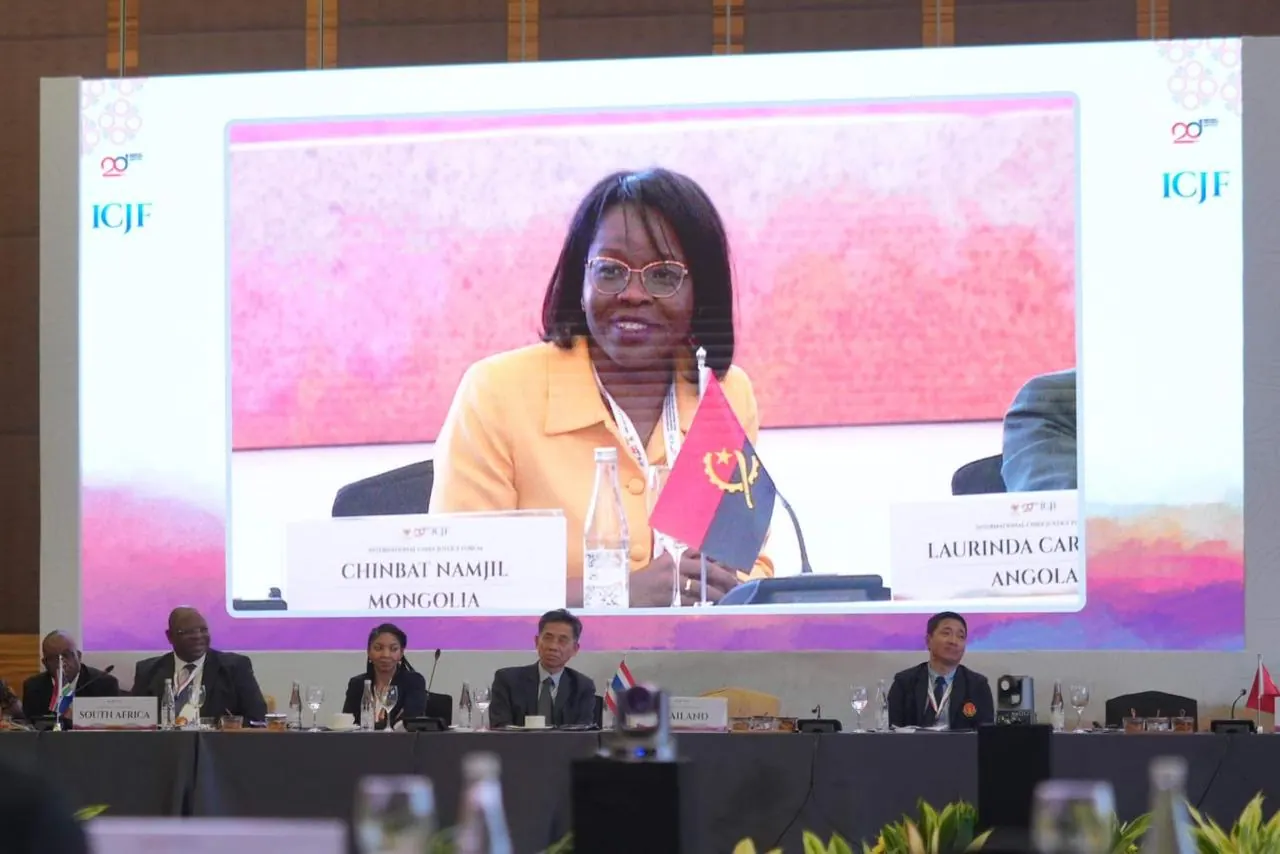
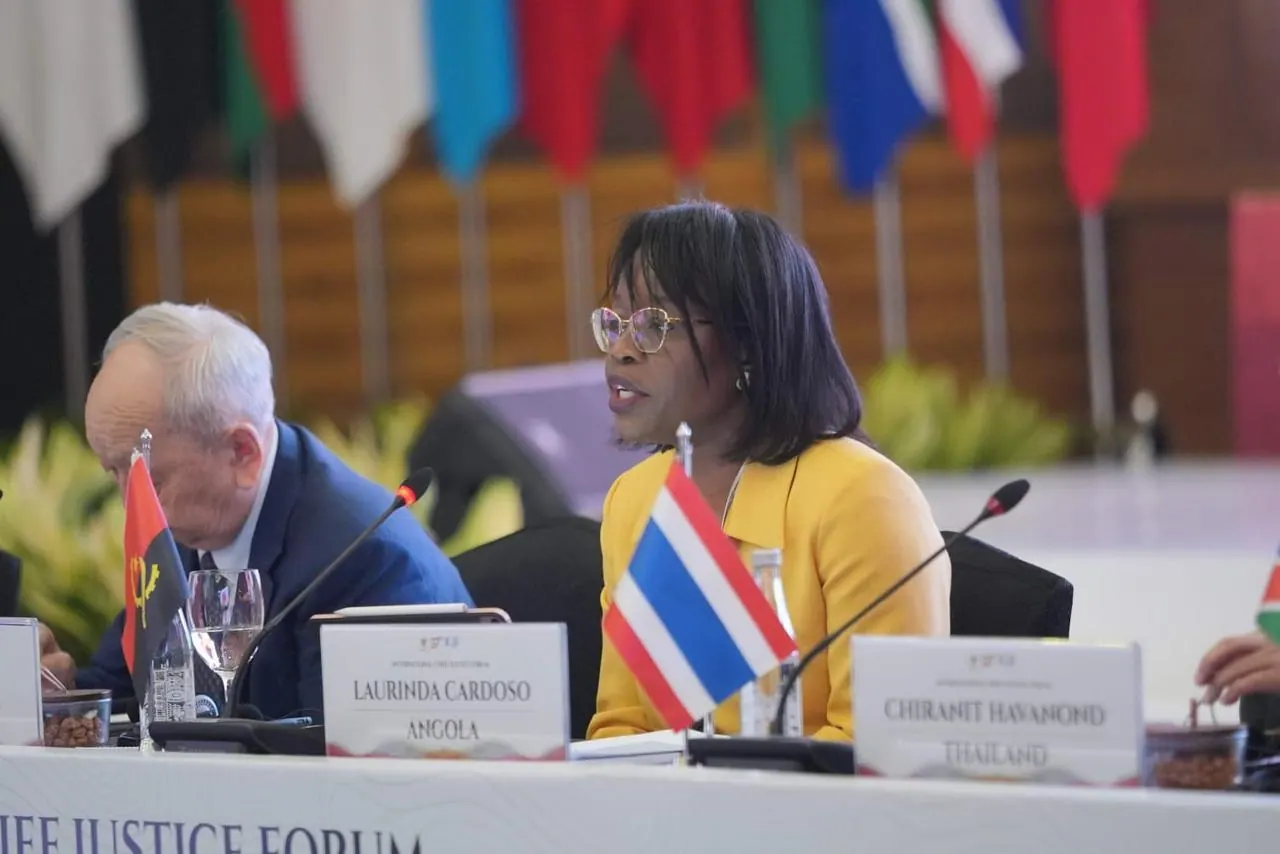
Address by the President of the Constitutional Court, Justice Laurinda Prazeres Monteiro Cardoso, at the International Forum of Chief Justices.
Excellencies,
We are most grateful to the organising team of this great event, and in particular to the Chief Justice of the Constitutional Court of Indonesia, Prof. Dr Anwar Usman, for the invitation extended and, above all, for the warmth and esteem shown.
Review of the Normative Acts of the Legislative Power
In the Angolan legal order, as in various modern legal orders, the principle of the supremacy of the Constitution is enshrined, its content being set out in Article 6 of our Magna Carta, which provides as follows:
- The Constitution is the Supreme Law of the Republic of Angola.
- The State shall be subject to the Constitution and founded on legality, and shall respect and ensure respect for the laws.
- Laws, treaties and other acts of the State, of the Local Government Bodies and of public entities in general shall be valid only if they are in conformity with the Constitution.
The principle of the supremacy of the Constitution, which has as its consequence the idea of constitutionality, provided for in Article 226 of the CRA, justifies the acts of the State, more specifically those of a normative nature, being subject to review by the Constitutional Court. To ensure that the normative acts of the Legislative Power may be subject to review before the Constitutional Court, the Constitution of the Republic of Angola provides, in Article 227, as follows:
All acts that constitute violations of constitutional principles and norms shall be subject to review of their constitutionality, namely: a) Normative acts; b) International treaties, conventions and agreements; c) Constitutional revision; d) Referendums.
Review of the acts in question takes place by way of abstract review, which may be prior or subsequent. As regards abstract prior review, Article 228 of the Constitution of the Republic of Angola, as well as Article 20 of Law No. 3/08 of 17 June – Constitutional Procedure Law, provide that it applies to any legislative instrument submitted for promulgation, any international treaty submitted for ratification or any international agreement submitted for signature. Once any of these instruments has been declared unconstitutional, it must be vetoed, not ratified or not signed, under Article 229 of the CRA and Article 25 of the Constitutional Procedure Law. Abstract subsequent review applies to any norm published in the Official Gazette (Diário da República), and, under Articles 230 and 231, both of the CRA, and Article 26 of the Constitutional Procedure Law, the following entities have standing to initiate proceedings before the Constitutional Court:
a) The President of the Republic; b) One tenth of the Members of the National Assembly in office; c) The Parliamentary Groups; d) The Attorney General; e) The Ombudsman; f) The Angolan Bar Association.
A declaration of unconstitutionality has generally binding force and produces effects from the entry into force of the norm declared unconstitutional, and it entails the revival of any norm that the latter had repealed; this scope may be more restricted where legal certainty, reasons of equity or a public interest of exceptional importance so require.
Grounds for and Necessity of Review Instruments
Constitutional jurisdiction has the role of judging whether or not a given legislative act of Parliament corresponds to what is called the higher general will. It was on the basis of this conception that, on 9 August 2021, in prior review proceedings concerning the Constitutional Revision Law, the Angolan Constitutional Court, despite having found that the law respected the material, formal and circumstantial limits on revision enshrined in the Constitution, declared unconstitutional, by Judgment No. 688/2021, the article providing for the submission of annual reports on its activities and on those of the other bodies of special jurisdiction (Court of Auditors) to the President of the Republic and the National Assembly for their information, on the grounds of violation of the principle of separation of powers enshrined in the Constitution of the Republic of Angola.
On 13 August of the same year, the National Assembly brought the law into line with the decision of the Constitutional Court, removing the unconstitutionality declared, and on 16 August it was published in the Official Gazette (Diário da República), Series I, No. 154.
Likewise, on 9 October 2013, in abstract subsequent review proceedings requested by 22 Members of the National Assembly, the Constitutional Court, by Judgment No. 319/2013, declared partially unconstitutional certain articles of the Organic Law approving the Rules of Procedure of the National Assembly (Articles 260, 268, 269, 270 and 271), approved by Law No. 13/12 of 2 May.
In the same way, the National Assembly brought the instrument into line with the decision of the Constitutional Court.
Along the same lines, on 15 December 2020, in abstract subsequent review proceedings requested by the Angolan Bar Association, the Angolan Constitutional Court, by Judgment No. 658/2020, not only declared the unconstitutionality but also determined the terms and effects of the decision, that is, its effectiveness.
Thank you very much!