
Translated from Portuguese. The Portuguese version prevails. Ler em português
Dear children, present here;
Your Excellency, Madam Governor of the Province of Cabinda;
Honourable Vice-President of the Constitutional Court;
Honourable Justices of the Constitutional Court;
Honourable retired Justice of the Constitutional Court, Professor Luzia Sebastião;
Your Excellencies the Deputy Provincial Governors for the Political and Social, Economic, and Technical and Infrastructure Areas;
Distinguished Representatives of the Public Prosecution Service;
Church Authorities, Traditional Authorities, Representatives of Political Parties and of Civil Society, dear guests;
Ladies and Gentlemen…
The CONSTITUTION is the fundamental and Supreme Law of a State; it contains norms relating to the structuring of the State, the formation of public authorities and the distribution of powers (between the Executive, the Legislature and the Judiciary), and it establishes the rights, guarantees and duties of Citizens. In other words, of all the laws that exist in a country, the Constitution is the most important. It is the Law of Laws.
The result of a historical constitutional process that went through several metamorphoses, the CRA came into force in February 2010.
The Constitution strengthened the foundations of the Angolan State, anchored in the principles of the Democratic State based on the Rule of Law, in respect for the dignity of the human person and in the will of the people, with the fundamental objective of building a free, just and democratic society, based on solidarity, peace, equality and social progress.
In any State, the Constitution is not merely an instrument that defines the legal status of political power. The Constitution is, first and foremost, a project for society, which defines all its aspirations, whether political, social, economic, cultural, environmental or other, provided they are supported or guaranteed by the principles of the Rule of Law.
Because it is a project for society, the implementation of constitutional norms involves a process of maturing of institutions, whether public or private in nature, and in this sense the Constitutional Court is unquestionably one of the main pillars of that process and, consequently, one of the main guarantors of respect for the application of the Constitution of the Republic, guardian of the Democratic State based on the Rule of Law, as well as of fundamental rights, freedoms and guarantees, asserting itself as a true Court of Human Rights.
The importance of the Constitution of the Republic justifies its being, as yet another year of its validity is added, the subject of continuous reflection, as is the case with the activities planned, carried out and still to be carried out throughout this Week.
Indeed, the organisation of this Technical and Academic Conference, under the theme “Protection of the Rights of the Child”, embodies a certain elevation of reflection on the most fragile human being, and touches on the place that the Constitution of the Republic of Angola reserves for safeguarding their fundamental rights, freedoms and guarantees.
The axiological content of the protection of the rights of the child has as its essential core the child's full and harmonious education and the protection of their health, living conditions and schooling, which constitute an absolute priority for the family, the State and society.
However, it is important to state and bear in mind that the protection of children does not come about through the mere enshrinement of their rights in the Constitution of the Republic of Angola, but above all through the creation, by the family, the State and society, of mechanisms of an institutional, administrative, moral and affective nature conducive to the implementation of those precepts.
As we said in Luanda, at the first activity of the Semana da Constituição da República de Angola (Constitution of the Republic of Angola Week), “the family is the first and main guarantor of the realisation of the rights of the Child. Indeed, the family itself, as a social organisation, is in itself a State in miniature.”
Excellencies,
Ladies and Gentlemen,
Allow us to conclude our opening words to this conference by sharing with Your Excellencies an excerpt from a poem dedicated to children. The theme: The Thinker.
“One day a child came before a thinker and asked him:
– How big is the Universe?
Stroking the child's head, he gazed into infinity and replied:
– “The Universe is the size of your world”.
Troubled, the child retorted
– How big is my world?
The thinker replied:
– It is the size of your dreams”.
If your dreams are small, your vision will be small, your goals will be limited, your targets will be tiny, and your capacity to weather storms will be fragile. Dreams water existence with meaning. The presence of dreams turns the wretched into kings and makes the old young, and their absence turns millionaires into beggars and makes the young old. Dreams bring health to the emotions, equip the fragile to be the authors of their own story, give the timid bursts of daring and make the defeated builders of opportunities”.
Dream …
(Augusto Cury in nunca desista dos seus sonhos).
Family, State, Society in general: so that our children may dream, and dream big, the mechanisms for giving effect to their rights must urgently be strengthened.
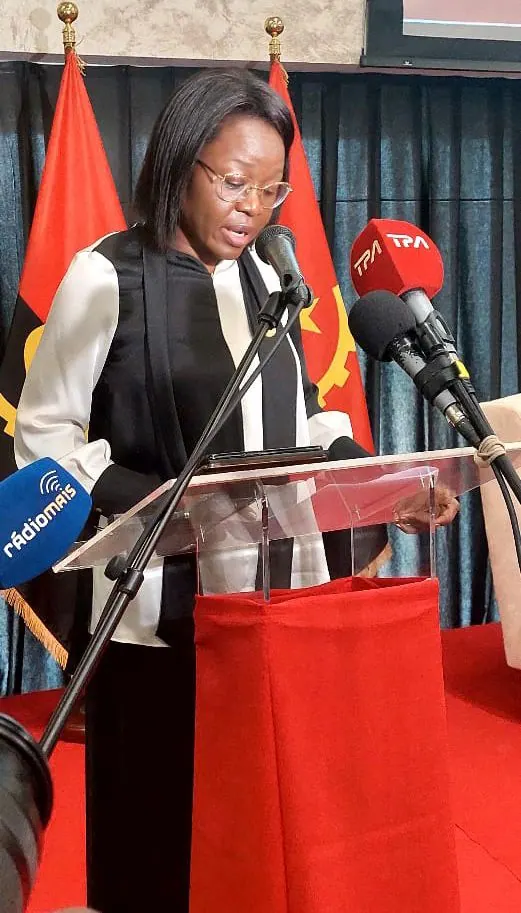
With these words, I declare this Conferência Magna (keynote conference) open.
Thank you very much for your attention.
Laurinda Prazeres M Cardoso.