Translated from Portuguese. The Portuguese version prevails. Ler em português
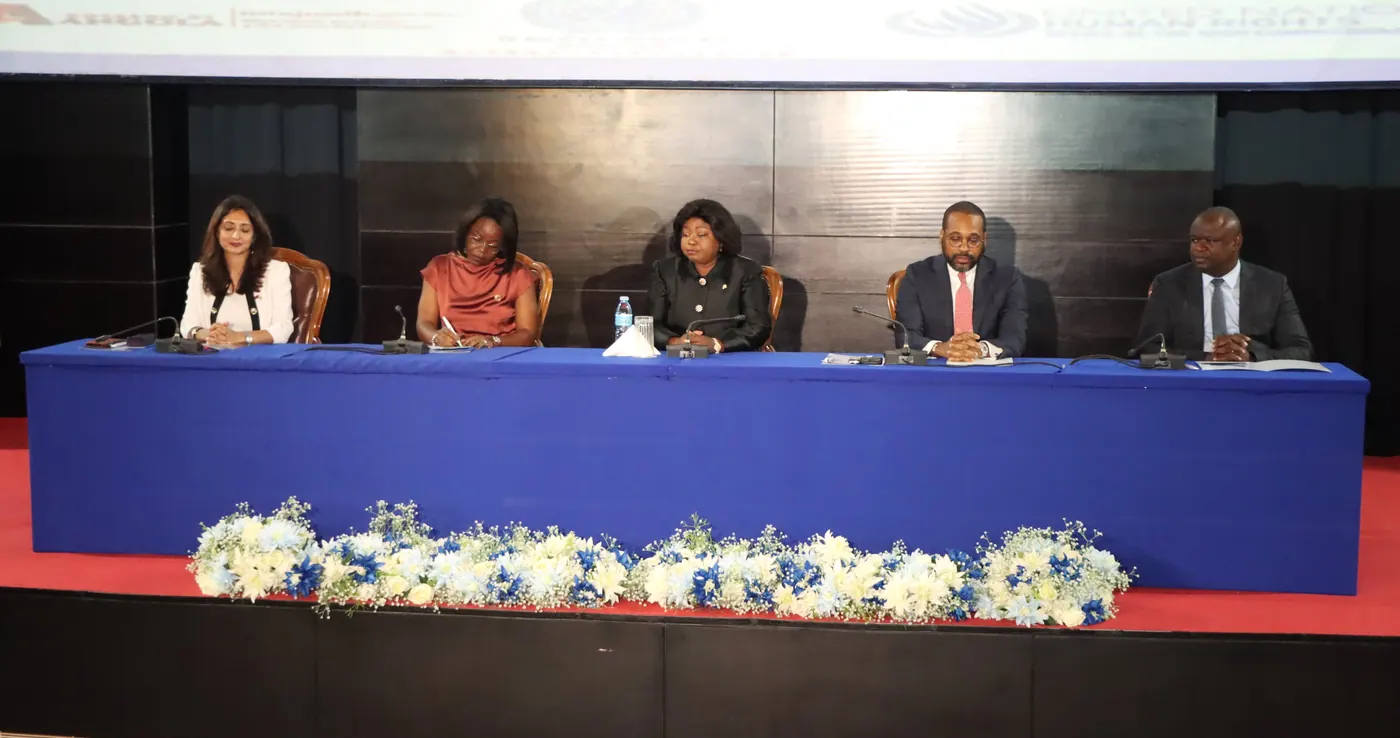
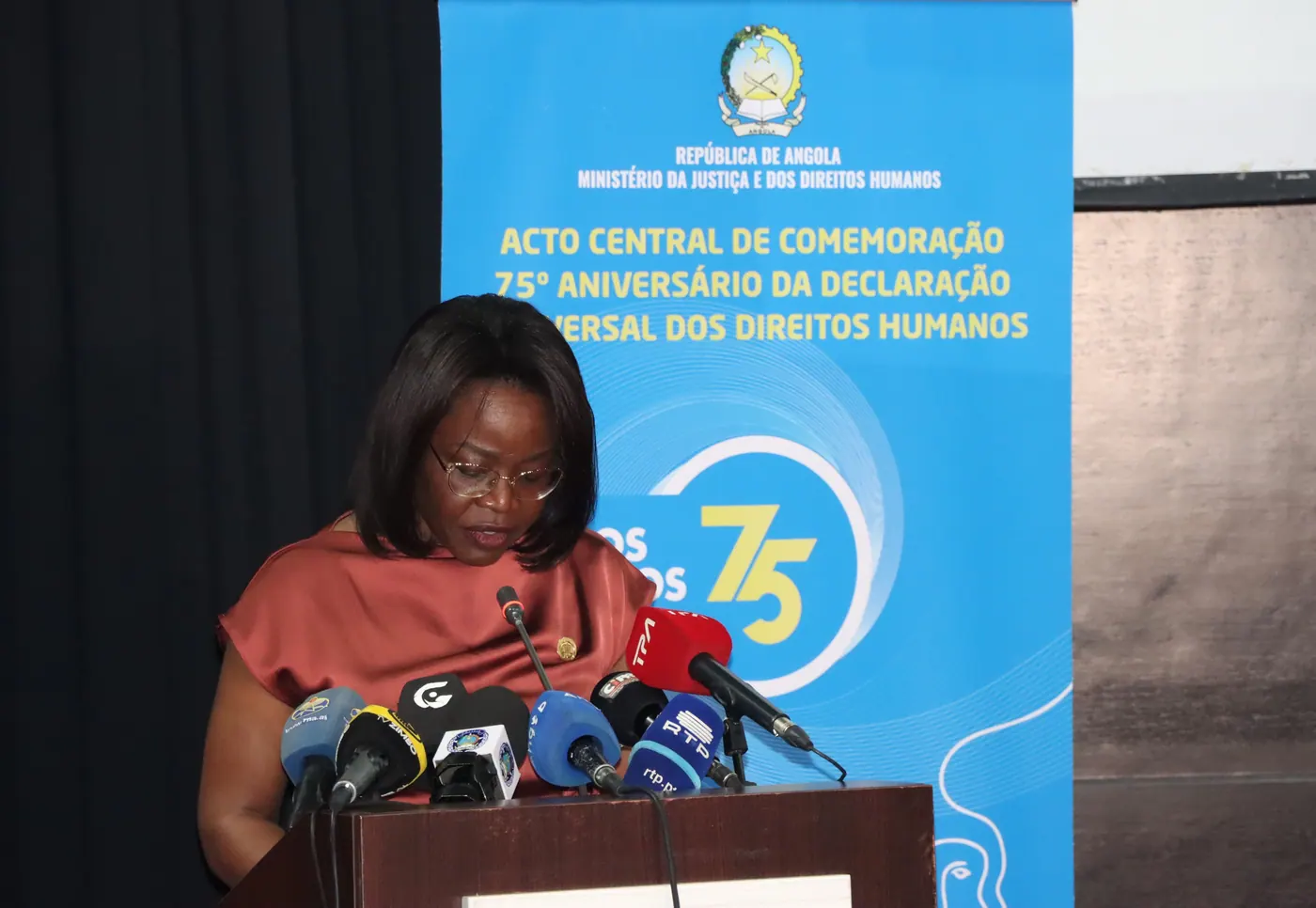
On the occasion of the 75th anniversary of the Universal Declaration of Human Rights, the Ministry of Justice and Human Rights of the Republic of Angola held a Conference marking the date on the morning of this Friday, 8 December 2023, at the Palace of Justice in Luanda.
Invited to the event, the President of the Constitutional Court, Justice Laurinda Prazeres Monteiro Cardoso, spoke in her address about the greatest good… LIFE.
Read in full
Ladies and Gentlemen, Distinguished Speakers;
Excellencies;
It was with enormous satisfaction that I received the invitation to offer some brief remarks at this great event, which serves to mark the 75th Anniversary of the Universal Declaration of Human Rights.
My brief and modest address is entitled “Protecting Life –the Greatest Good”. With this title I wish to invite Your Excellencies to undertake, together, a reconstruction of the theoretical paradox and the practical imbalance of the Universal Declaration of Human Rights – without, obviously, any intention on our part of nullifying or calling into question the virtues of the COMMON IDEAL of humanity that was embodied in the Universal Declaration of Human Rights.
The History of Humanity has not always attributed the same meaning to the phrase “All Men Are Born Free and Equal in Dignity and Rights”. There were moments in history when slavery and the exclusion of black people and women were accepted. From the twilight of peoples to the proclamation of human dignity as a universal value, the road was a long one.
The Universal Declaration of Human Rights is, formally, a Resolution of the UN General Assembly. Its articles are very broad in scope, since they cover not only civil and political rights but also economic and social rights, at a time when most constitutions did not enshrine them. These are rights with a universal vocation, which must be guaranteed to all persons as members of the “human family”, 3 regardless of any tie of nationality. In Angola, the Universal Declaration of Human Rights acquired binding force by constitutional reference – see Article 26(2) of the Constitution of the Republic of Angola.
Excellencies, Distinguished Participants;
Certainly, when in 1948 political leaders adopted the Universal Declaration of Human Rights, they did not intend it to be a mere formal isomorphism, a one-off response to the scars left by the Second World War – in other words, that it should be no more than another theoretical text.
Today's world shows us that the mere formal enshrinement of norms on the dignity of the human person, already consolidated and solidified in themselves as a kind of national universality, is not enough when the primary reason – which is the protection of life – is not assured.
Permanently proclaiming the protection of the dignity of the human person in historical and political discourse, without this representing a paradigm shift in practical terms, renders such proclamations disposable, given the concrete fact that today's world continues to be marked by “contempt” for human life.
Humanity has witnessed the cyclical history of wars, which turn into the most macabre and sombre scenarios for different peoples. It is in contexts of WAR that the problem of contempt for human life takes on alarming proportions.
While it is true that wars have cyclically been part of historical processes, and their potentially problematic character for the collective memory of humanity is recognised, since they indiscriminately claim human lives, it is no less true that the latest political and military events around the world do not herald a reversal of this bellicist outlook, which plunges humanity ever deeper into profound uncertainty with regard to the defence of human rights.
In Africa, in Palestine, in Europe and in various other parts of the world, as a consequence of wars, the number of excluded and marginalised citizens is growing, in clear violation of their human rights.
At a cruising speed never seen before, the benefits of new technologies unfortunately allow us to see the violation of rights that are innate, inasmuch as they are born with the human being and therefore precede any convention or grant by the State.
Every day we see children dying because of WAR. In these regions of the world, the right to life is being trivialised, in flagrant violation of all international instruments and mechanisms, which is a paradox when one takes into consideration the very ends that these instruments seek to protect.
Having come this far, it is legitimate for us to ask: have contexts of war respected the right to life of defenceless people, particularly the elderly and children?
Safeguarding the right to life must be the bulwark of human rights, since it constitutes the principle and the raison d'être of the common purpose of protecting the dignity of the human person. It soars far above normative orders and must be understood as a paradigm to inspire the other rights aimed at protecting the dignity of the human person.
For this reason, the right to life must stand at the centre of the system for the protection of human rights, insofar as it (life) is and always will be the primordial, initial and fundamental motive, for without it one cannot even speak of respect for the dignity of the human person, since the fundamental nature of human rights rests on respect for its existence.
Excellencies,
Distinguished Speakers;
Seventy-five years after the Universal Declaration of Human Rights, it is still imperative to (re)think, debate and seek solutions to the issues connected with the protection of and respect for the Dignity of the Human Person.
There is a pressing need to impose on organisations urgent, balanced and equitable solutions aimed at putting an end to the flagrant violations of human rights in different parts of the world.
It is urgent that the international instruments protecting human rights be applied immediately and effectively, so that the deaths of civilians and, regrettably, of children do not serve as journalistic backdrops for the agendas of the economically stronger countries for fund-raising purposes.
Excellencies;
I conclude my address by reiterating our thanks and expressing the wish that, at this Conference, the presentations, debates and suggestions be guided by a perspective that problematises the current state of human rights, and not merely by simple expositions of theoretical concepts.
THANK YOU VERY MUCH FOR YOUR ATTENTION.