Translated from Portuguese. The Portuguese version prevails. Ler em português
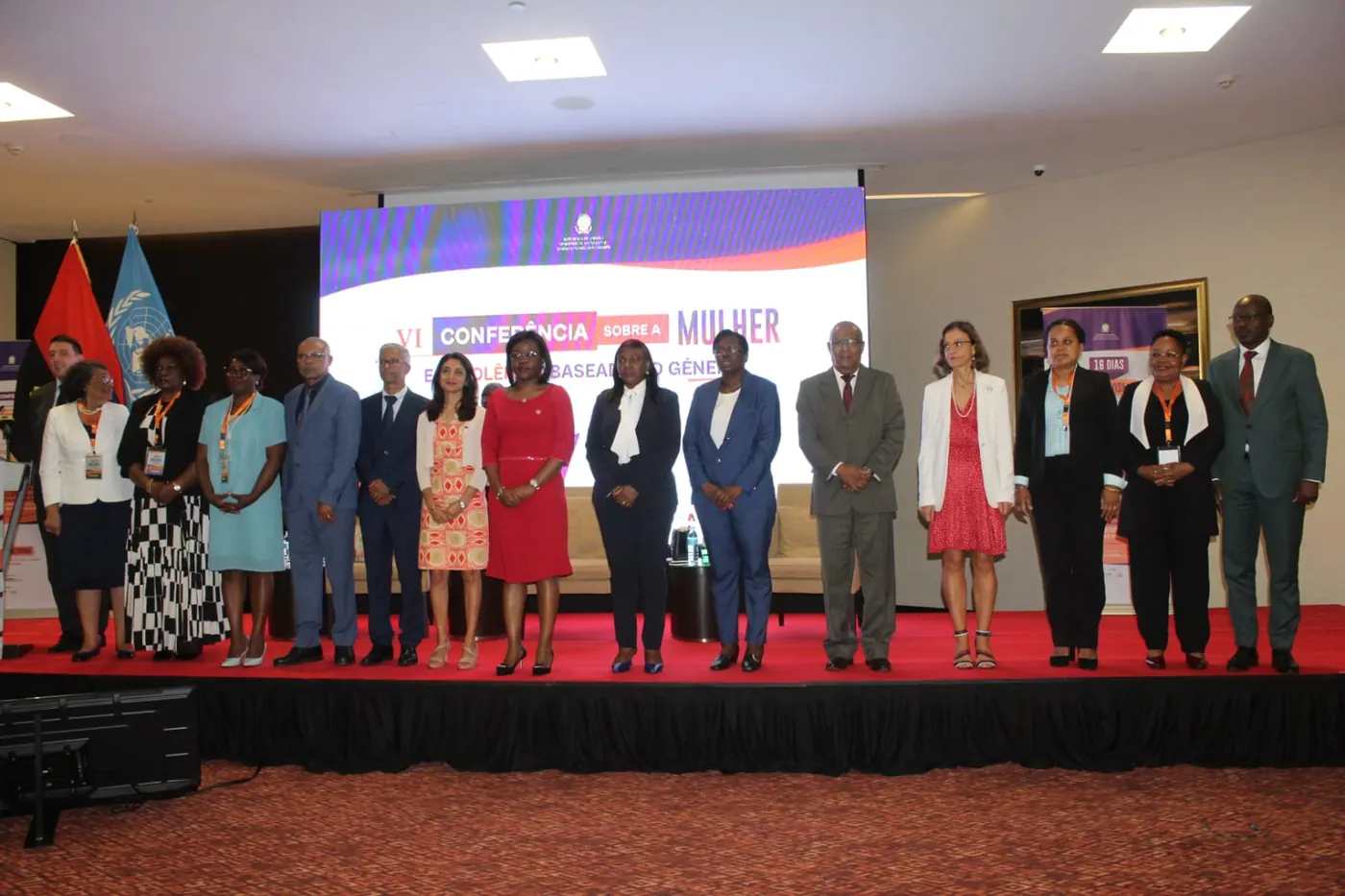
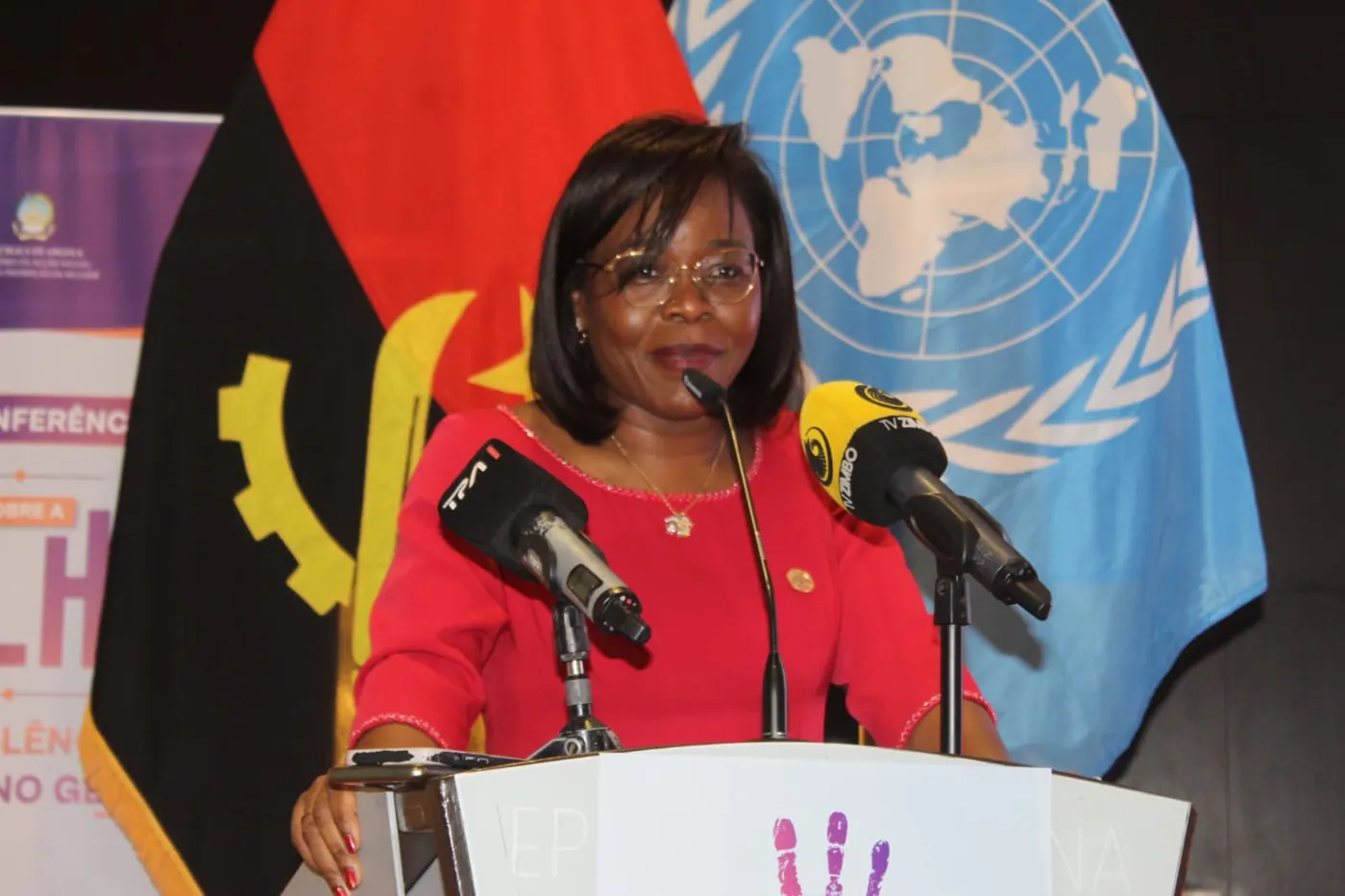
Address delivered by the President of the Constitutional Court, Justice Laurinda Prazeres Monteiro Cardoso, on Monday, 27 November 2023, on the occasion of the VI Conferência Nacional sobre a Mulher e a Violência (6th National Conference on Women and Violence), organised by the Ministry of Social Action, Family and the Promotion of Women.
6TH NATIONAL CONFERENCE ON WOMEN AND VIOLENCE
PREVENTING VIOLENCE AGAINST WOMEN AND GIRLS TO STRENGTHEN THE UNITY OF ANGOLAN FAMILIES.
Her Excellency Mrs Delfina da Kindanda, Secretary of State for the Family; Her Excellency Mrs Ana Celeste Cardoso, Secretary of State for Human Rights; Her Excellency Mrs Zaira Virane, Representative of the United Nations in Angola; Distinguished Guests;
Ladies and Gentlemen.
It was with immense pleasure that I accepted the invitation to deliver the opening address at this 6th National Conference on Women and Violence. As a woman, having the opportunity to deliver these modest words is, without doubt, an enormous privilege.
Excellencies, dear ladies and gentlemen here present,
Throughout history, at various times and in various places, violence against women has reached alarming proportions that have called into question the principle of the dignity of the human person, which has drawn the attention of the Member States of the United Nations and of others besides.
The moral and legal evolution of societies has meant that, in the modern world, women have come to be viewed from a different perspective, based on equality and non-discrimination on grounds of sex (see Article 23 and Article 35(2), both of the Constitution of the Republic of Angola – CRA, Article 2 of the African Charter on Human and Peoples' Rights and the Maputo Protocol).
These legal guidelines constitute mandates for organising an institutional agenda to combat violence against women, from childhood through all the other stages of life, which once again justifies the importance of events of this nature, a space in which to reflect on and design solutions to the problems under discussion here.
According to the World Health Organization, violence against women consists of "any act of gender-based violence that results in, or is likely to result in, physical, sexual or mental harm or suffering to women, including threats of such acts, coercion or arbitrary deprivation of liberty, whether occurring in public or in private life".
Violence against women manifests itself whenever a girl is prevented from attending school in order to help her mother with household chores/in the informal market/street vending to ensure the family's subsistence; or when a young girl who is a minor is forced into a traditional marriage; it also manifests itself whenever a woman is belittled and mentally and physically assaulted by her spouse or de facto partner; when a woman is harassed and violated and those who should defend her place the blame on the victim on account of her physical appearance; or in the workplace, where recognition of a woman's merit is made conditional upon certain favours.
Unfortunately, the list is long. This is a harsh reality that must not be ignored or minimised, since it violates the dignity of the human person, which finds its protective essence in the Universal Declaration of Human Rights and constitutes a founding principle of the Angolan State, as established in Article 1 of the Constitution of the Republic of Angola.
Violence against women, especially when perpetrated within the family, represents a threat to the stability of the family, which, as is well known, constitutes the fundamental nucleus of the organisation of society and is the object of special protection by the State – see the provisions of Article 35 of the Constitution of the Republic.
In the Angolan context, in view of the factual situation and in line with the international instruments for the protection of women's rights, Law No. 25/11 of 14 July (Law against Domestic Violence) was approved, together with a considerable number of normative instruments whose essential aims are to combat Domestic Violence, to Define the National Policy for Gender Equality and Equity, and to establish the Legal Regime for the Recognition of De Facto Unions by Mutual Agreement and the Dissolution of Recognised De Facto Unions and the Legal Regime for the Social Protection of Domestic Workers.
The aforementioned Law against Domestic Violence regards as domestic violence any act or omission that causes physical injury or deformity and temporary or permanent psychological harm that violates the human person. Furthermore, it also defines various forms of violence against women, the most frequent being (i) sexual violence; (ii) property-related violence; (iii) psychological violence; (iv) verbal violence; (v) physical violence; and (vi) family abandonment.
The tortuous path in the pursuit of the dignity of Women and the elimination of all forms of violence and discrimination against them also finds an echo in the 2030 Agenda for Sustainable Development, in particular in the goals relating to achieving gender equality and the empowerment of all women and girls, with a view to ending violence against women and girls and providing social protection.
Against this backdrop, having regard to the international instruments ratified by Angola and the most frequent types of violence in our country, the prevention of violence against women and girls must be based on the following postulates:
a) Adopting appropriate legislative measures with duly defined sanctions, prohibiting all forms of discrimination against women;
b) Ensuring the development and advancement of women, guaranteeing them the exercise and enjoyment of fundamental rights and freedoms on a basis of equality with men;
c) Guaranteeing family education that includes a proper understanding of maternity as a social function and of the common responsibility of men and women in the upbringing of their sons and daughters;
d) Approving appropriate policies to suppress all forms of trafficking in women, exploitation and prostitution;
e) Eliminating prejudices, customs and practices based on the idea of the superiority of men over women, since they are not worthy of legal force, because they violate the Constitution and the dignity of the human person;
f) Improving the network of services, support and shelter for victims of violence and promoting information and awareness-raising on domestic violence;
g) Continuing the fight against trafficking in women and the commercial exploitation of adolescent/young women and adopting the recommendations provided for in international treaties in the area of violence against women;
h) Focusing on prevention, through awareness-raising actions that contribute to reducing cases of violence against Women;
i) Improving and extending support for victims of violence, ensuring more humane and qualified assistance through the continuous training of public and community agents;
j) Strengthening educational and cultural actions that disseminate egalitarian attitudes and ethical values that combat violence;
k) Carrying out advertising campaigns and talks aimed at raising public awareness and encouraging the reporting of all forms of violence against Women;
l) Training families and police officers in the prevention of cases of trafficking in women and girls.
Without prejudice to the framework of possible solutions described, it is important to note that, if we are to succeed as a nation in this thorny battle, we must not leave this task solely in the hands of the State, since success requires the participation of everyone! It is within the family, in schools, in institutes, in universities, in businesses, in churches, in the community and in society in general that the fight against this scourge must continue, since violence against Women cuts across society, claiming as its victims people of different social classes, backgrounds, ages, religions, marital status, levels of education or races.
Excellencies,
One of the great instruments for combating violence against women is education. We must invest in the education of women and men at all levels and create the material and financial conditions for protection.
I would highlight here the importance of all of us working to strengthen the culture of reporting sexual violence against women and girls, which has been increasing, so that those responsible are brought to trial and, where guilt is established, convicted.
Violence inhibits the empowerment of women at all levels, since it limits their capacity to act and to choose. It reflects and reinforces inequalities between men and women, in clear violation of fundamental rights, freedoms and guarantees.
Excellencies, distinguished participants,
I conclude my address in the hope that at this conference, and in the subsequent activities, just as at family gatherings, the burning issues will be addressed and solutions put forward that are capable of bringing about improvements in the daily lives of Angolan women in particular, and of our families in general.
Thank you very much for your attention.