
Translated from Portuguese. The Portuguese version prevails. Ler em português
TC/Communication.
The President of the Republic, João Manuel Gonçalves Lourenço, presided on Tuesday, 3 March, in Luanda, over the opening ceremony of the 2026 Judicial Year, held under the motto "Justice, Ethics and Responsibility"
In his address, the Head of State highlighted the central role of the Constitution of the Republic in the functioning of the State, stating that “the Constitution of the Republic continues to be our guiding compass, our true social pact, the central legal basis not only for legitimising the exercise of Executive, Legislative and Judicial powers, but also for the exercise of full citizenship.”
In his speech, the President of the Republic praised and encouraged the initiatives of the various State institutions to disseminate the Fundamental Charter.
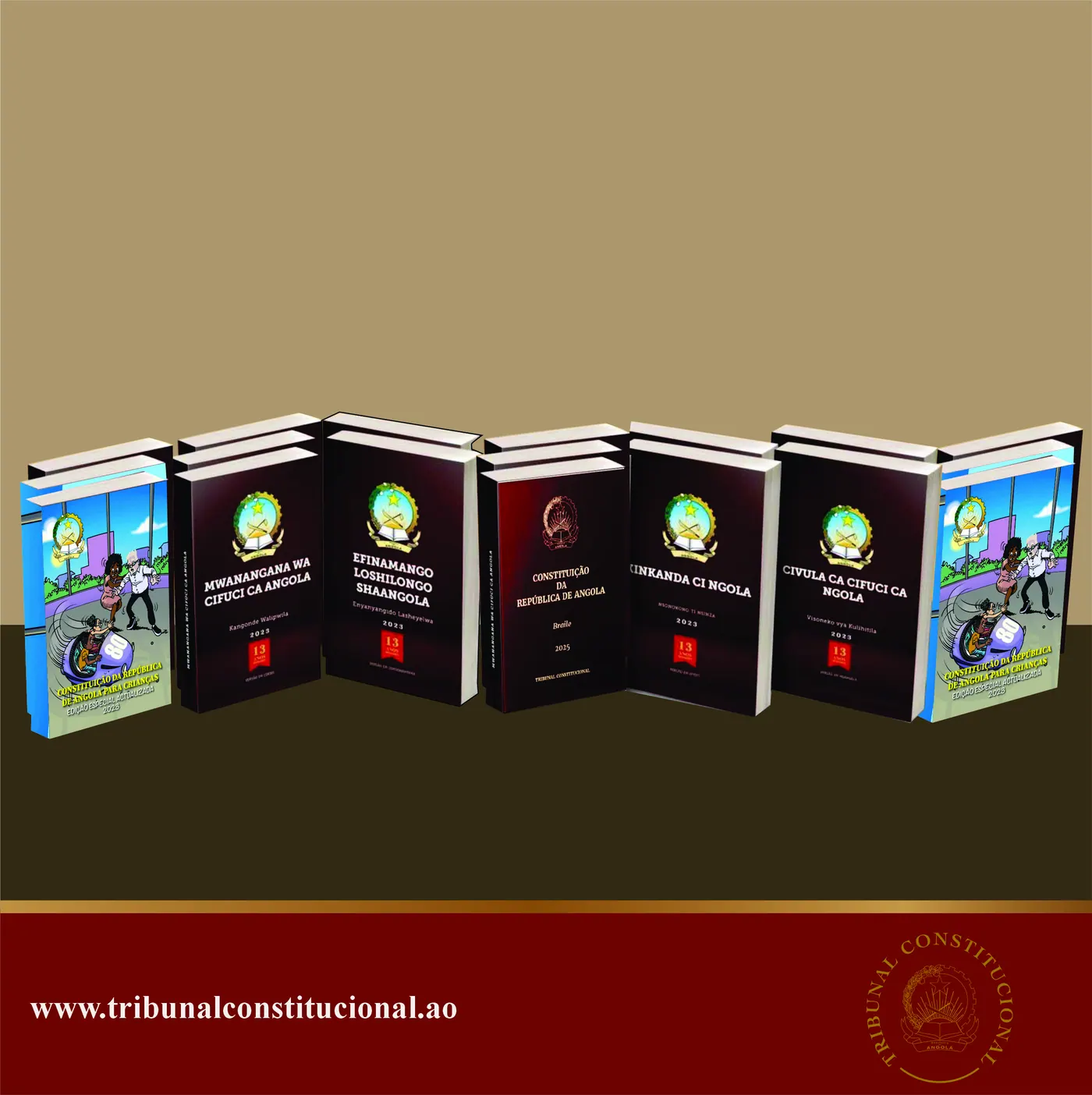
“I therefore take this opportunity to encourage all the initiatives that have been undertaken with a view to its dissemination, including its translation into the national languages and the Braille version, as a way of raising the legal culture of citizens, particularly those who, for congenital or acquired reasons, are unable to see or hear,” said the Nation's Highest Magistrate.
Within the scope of its powers, the Constitutional Court has carried out various actions to promote and disseminate the Constitution, including its translation into several national languages, namely Kimbundu, Umbundu, Kwanhama, Nganguela, Fiote, Kikongo, Nhaneka, Tchokwe and Helelo.
The institution has also produced a version, the Constituição Infantil (Children's Constitution), in a format adapted to children and young people, using comic strips and accessible language, with the aim of facilitating understanding of constitutional principles and of fundamental rights and duties.
The Constitutional Court has also made the Constitution available in Braille, an initiative that aims to promote inclusion and ensure access to legal information for citizens with visual impairments, reinforcing the principle of equality in the exercise of fundamental rights.