
Translated from Portuguese. The Portuguese version prevails. Ler em português
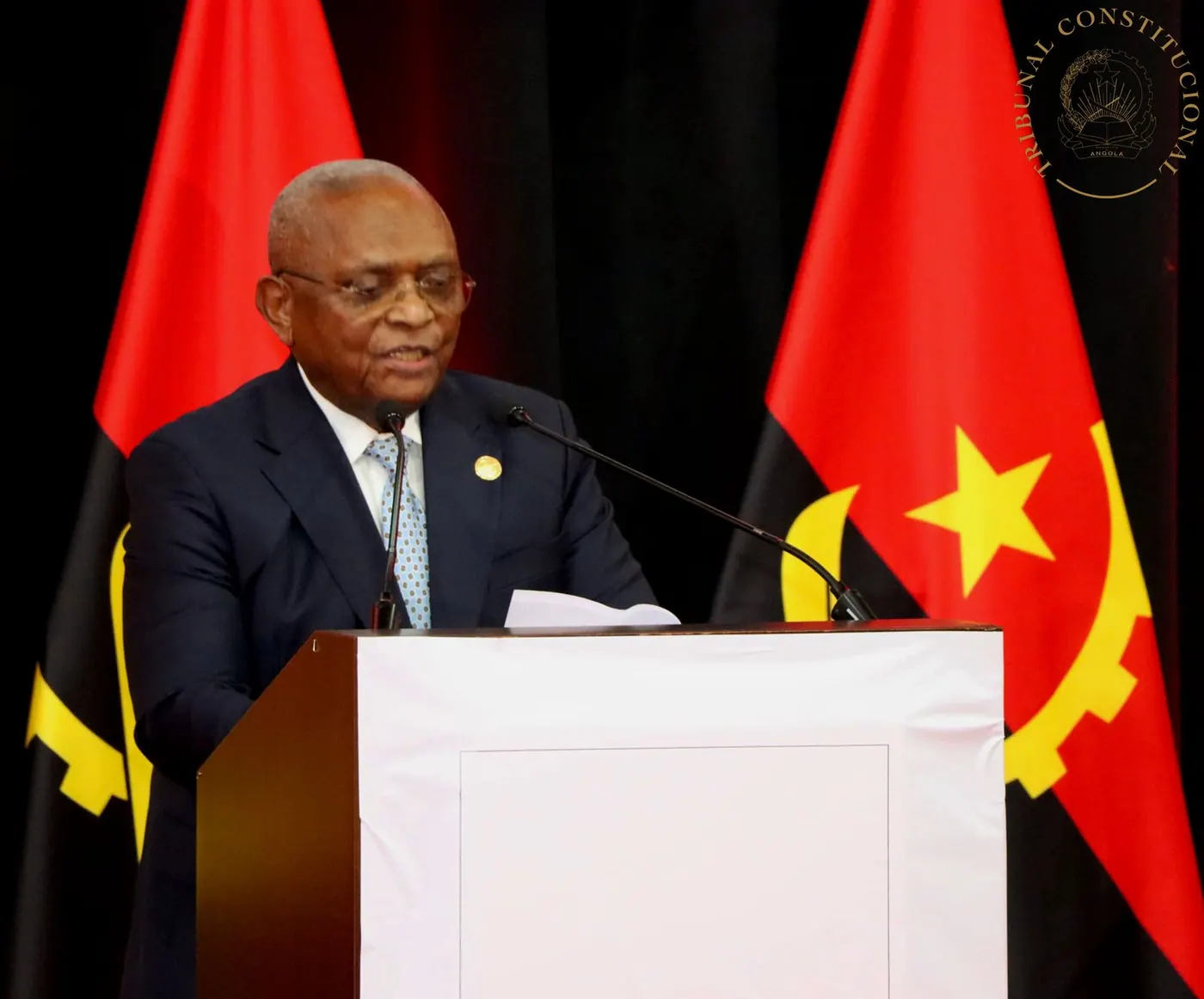
Address by the retired President of the Constitutional Court, Justice Manuel da Costa Aragão.
Ladies and Gentlemen,
It is with great honour and a sense of responsibility that I join in the celebrations of the eighteenth anniversary of the Constitutional Court, an institution that occupies a central place in the consolidation of the Democratic State governed by the Rule of Law in Angola.
It was with great satisfaction that I accepted the honourable challenge from the Honourable President of the Court, Dr Laurinda Jacinto Prazeres, to deliver a shared address.
My words will therefore be brief. Over more than four decades in the justice sector, I have had the privilege of following different stages in the evolution of our judicial system and, in particular, of constitutional jurisdiction. As a Lawyer; Deputy Minister; Minister of Justice; as President of the Supreme Court and, finally, as President of this Court, I lived through experiences that consolidated in me the conviction that constitutional justice is the ultimate guarantor of institutional stability, of the preservation of democratic principles, of the protection of fundamental rights and of the building of a solid and lasting State governed by the Rule of Law.
To celebrate the eighteen years of the Constitutional Court is to celebrate a path marked by challenges, achievements and lessons learned. It is to recognise the role of this institution in defending the Constitution, guaranteeing the fundamental rights of citizens and preserving the balance between the bodies of sovereignty.
On 21 November 2017, I was appointed to the Presidency of this august institution. For me, it was an entirely new reality, a legal universe substantially different from the one to which I had been accustomed throughout my professional life. I confess that, had it depended solely on my own will, I would hardly be here today as retired President of the Court. For many years, I was convinced that Law was, essentially, that which was applied by the courts of law. My time at the Constitutional Court obliged me to revisit many of my certainties and to discover a new dimension of legal science.
It was necessary to learn to think about the Constitution, to understand its centrality and to realise that it is in the Constitution that the entire legal edifice finds its foundation, unity and meaning. Today, after this unique experience, I am convinced that Law without the Constitution is blind, and that the Constitution without Law is lame. One cannot fully accomplish its mission without the other; they complement and strengthen each other in the achievement of justice and the defence of human dignity. The truth is that, almost two years after taking office at this august Court, I fully understood the constitutional nature and mission, as a judge of the community (juiz da colectividade): to defend the Constitution and to protect fundamental rights, above all when they belong to the most vulnerable party in a legal relationship. It was in this sense of constitutional justice that I found, in dissenting opinions, a legitimate instrument for affirming legal conscience and justice.
Among the legacies I hope to leave to present and future generations, special mention is due to the intellectual courage expressed through dissenting opinions.
At a time when unanimity is sometimes confused with virtue, it is important to remember that a judge's independence is also expressed in the capacity to uphold his or her own legal positions when conscience and the interpretation of the Constitution so require. Dissenting opinions are not mere expressions of disagreement. They are expressions of fidelity to the Law, testimonies of and respect for the independence of each judge and, often, firm voices in defence of the most vulnerable, of fundamental rights and of the achievement of substantive justice.
The history of constitutionalism teaches us that many of the great legal advances were born precisely of ideas that, at first, seemed solitary. Dissenting opinions reflect precisely this conviction: that a judge must act in accordance with his or her conscience and interpretation of the Law, contributing to the enrichment of legal debate and to the strengthening of the institution itself.
I therefore thank the members of the Court and the staff during the period in which we were here, for it was thanks to your effort and dedication that we produced more than 200 Judgments during that period. Among these, particular mention should be made of the Judgment on the 2021 constitutional revision and of the judgment that declared unconstitutional the legal provision conferring on the Public Prosecution Service powers to use listening devices in public places, among others of undeniable relevance to the consolidation of the Rule of Law. During this period, the Constitutional Court experienced remarkable moments of institutional growth and international recognition. In 2019, following agreements previously signed by my predecessor, Dr Rui Ferreira, the Constitutional Court of Angola assumed, for the first time, the presidency of the Conference of Constitutional Jurisdictions of Africa, an achievement that raised the prestige of Angolan constitutional justice on the continent and strengthened our Country's participation in the major African legal debates. In that capacity, I signed an agreement with the Association of Francophone Constitutional Courts (ACCF), headquartered in Canada. The Palace of Justice also became home to the Peace Bell, a universal symbol of concord, dialogue and peaceful coexistence. Its installation represented much more than a protocol act: it represented the reaffirmation of the role of Justice as an instrument of social pacification and of the promotion of harmony among citizens.
It is equally important to recall the holding, in Angola, of the Congress of the Conference of Constitutional Jurisdictions of Africa, an occasion marked by the memorable address of the eminent judge Mohengo Mohengo, then President of the Constitutional Court of South Africa. His speech had wide repercussions across the continent, above all when he argued, clearly and courageously, for the need for fairer and more dignified remuneration for judges, as an essential condition for preserving their independence and impartiality. But in life, great memories are not revealed only in moments of consensus. They are also revealed in the calm and responsible manner in which the most complex debates and the most sensitive institutional challenges are faced. In that context, the debate surrounding the age limits of judges and the interpretation of the rules on compulsory retirement in a Constitutional Court such as ours remains in the national legal memory. May the Constitutional Court continue to assert itself as guardian of the Constitution, defender of democratic legality and guarantor of fundamental rights, always keeping alive citizens' confidence in Justice. In celebrating these eighteen years, I pay tribute to all the judges, staff and collaborators who have contributed to building and asserting this institution. May present and future generations find inspiration in a commitment to truth, independence and justice.
Congratulations to the Constitutional Court on its eighteen years of existence. May it continue to serve Angola with dignity, courage and fidelity to the highest constitutional values. Thank you very much.
Luanda, 15 June 2026
Manuel da Costa Aragão