
Translated from Portuguese. The Portuguese version prevails. Ler em português
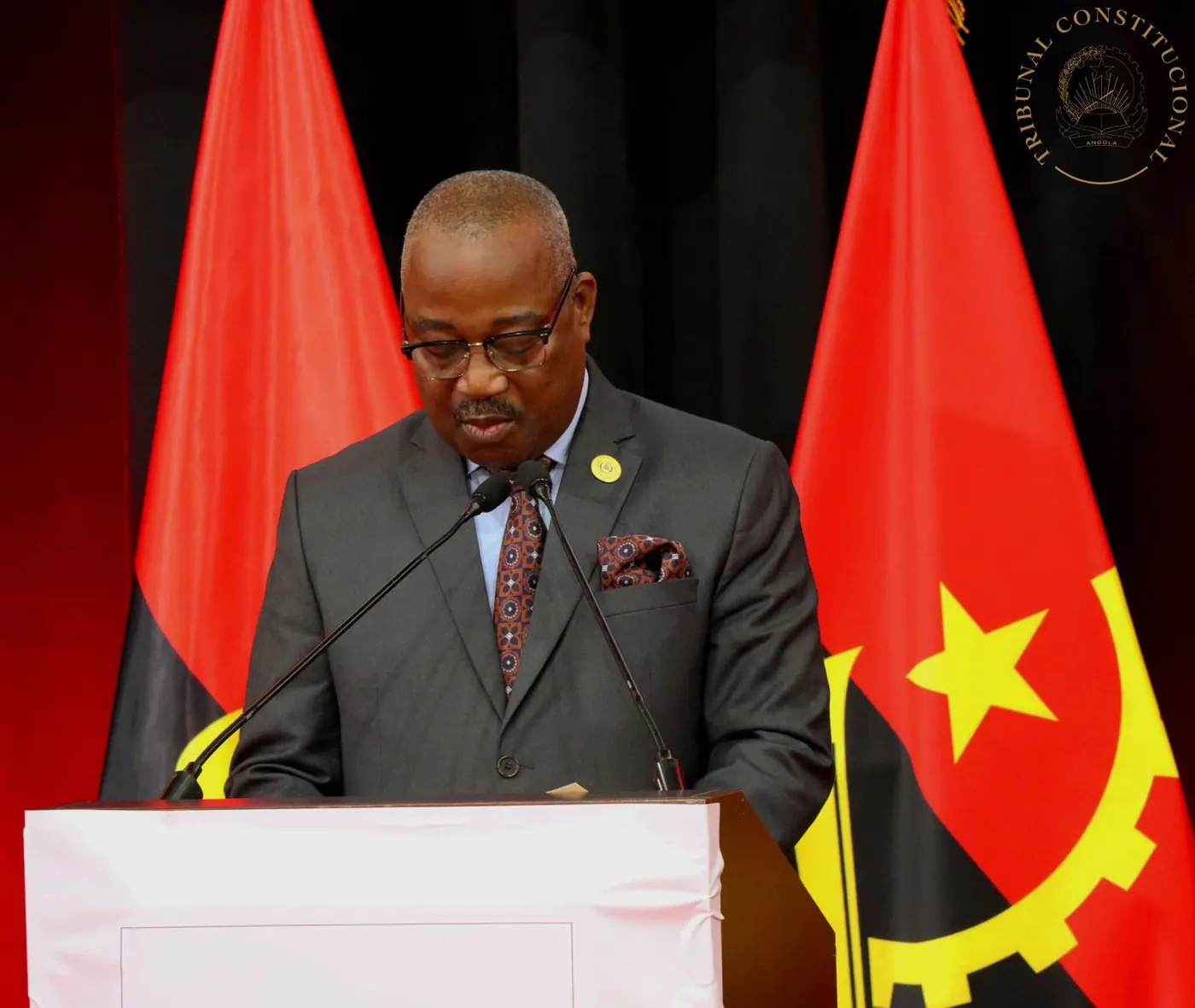
Address by the First Vice-President of the National Assembly, Américo Cuononoca.
Ladies and gentlemen. It is with deep respect and a sense of responsibility that I address you on behalf of His Excellency Dr Adão Francisco Correia de Almeida, President of the National Assembly, whom I have the great honour of representing here, to say a few words at this Event, at which the Constitutional Court completes 18 years since its institutionalisation.
The 220 Members of Parliament and the body of parliamentary staff and officers join in the festivities of the Constitutional Court and extend their warmest congratulations to the Honourable President of this Court, expressing their commitment to ever closer cooperation between the National Assembly and the Constitutional Court of the Republic of Angola.
Ladies and Gentlemen,
Over these years, the Constitutional Court has performed its functions with diligence and efficiency, with a view to administering justice in matters of a legal and constitutional nature, in accordance with the Constitution and the law.
The powers of this Court are laid down in the subparagraphs of Article 181(2) of the CRA, namely:
(a) To assess the constitutionality of any rules and other acts of the State;
(b) To conduct prior review of the constitutionality of the laws of Parliament;
(c) To exercise jurisdiction over other matters of a legal-constitutional, electoral and party-political nature, in accordance with the Constitution and the law;
(d) To assess, on appeal, the constitutionality of decisions of the other Courts that refuse to apply any rule on the grounds of its unconstitutionality;
(e) To examine, on appeal, the constitutionality of decisions of the other Courts that apply rules whose constitutionality was raised during the proceedings.
Distinguished guests,
In today's reality, a world of uncertainty and constant change, the Constitutional Court has been asserting itself in the process of institutional modernisation and of building a genuine democratic State based on the rule of law.
This effort aims to give effect to some of the tasks of the Angolan State, which sets out to ensure fundamental rights, freedoms and guarantees, to progressively create the conditions necessary to make citizens' economic, social and cultural rights effective, to promote policies to defend and strengthen democracy, and to encourage the democratic participation of citizens and civil society in resolving national problems. However, the Constitution of the Republic of Angola is not intended solely to resolve political questions, but also to ensure greater balance among the powers of the State. The Constitutional Court in Angola has contributed to a political approach, addressing, consistently and with a strategic vision, the challenges of national development.
Illustrious guests.
The socio-cultural, economic, political and technological dynamics of today's world require this Court to continuously build the capacity of its staff, through contact with relevant international experience, with a view to improving the quality of the work of the Judges and of its staff, which calls for rigorous monitoring of training plans.
It is also its responsibility, on the basis of its powers, to continue contributing to high-level dialogue and to strategic reflection with the aim of linking political training with Inclusive Economic transformation, and towards ethical leadership combined with Integrity.
Distinguished guests,
I believe that the current challenges of deepening cooperation and promoting social progress must be met with institutional pragmatism and the ability to adapt to the transformations of the current international and geopolitical context. Only in this way can the affirmation and credibility of sovereign and inclusive States in Africa and in the world be achieved.
I conclude by stressing that the strategic challenges of the process of building a fair and equitable judicial system require a comparative analysis and the sharing of practical experiences of governance and judicial organisation among justice operators, the Angolan Parliament and the Nations with which relations are established through bilateral or multilateral agreements.
In this way, a common response can be achieved, with the affirmation of the action of all the Courts and of civil society, transforming challenges into strategic opportunity, in order to achieve the prosperity and sustainable development of Angola.
Once again, we reiterate our congratulations on the 18 years of existence of the Constitutional Court of the Republic of Angola.
Thank you very much for your attention.