
Translated from Portuguese. The Portuguese version prevails. Ler em português
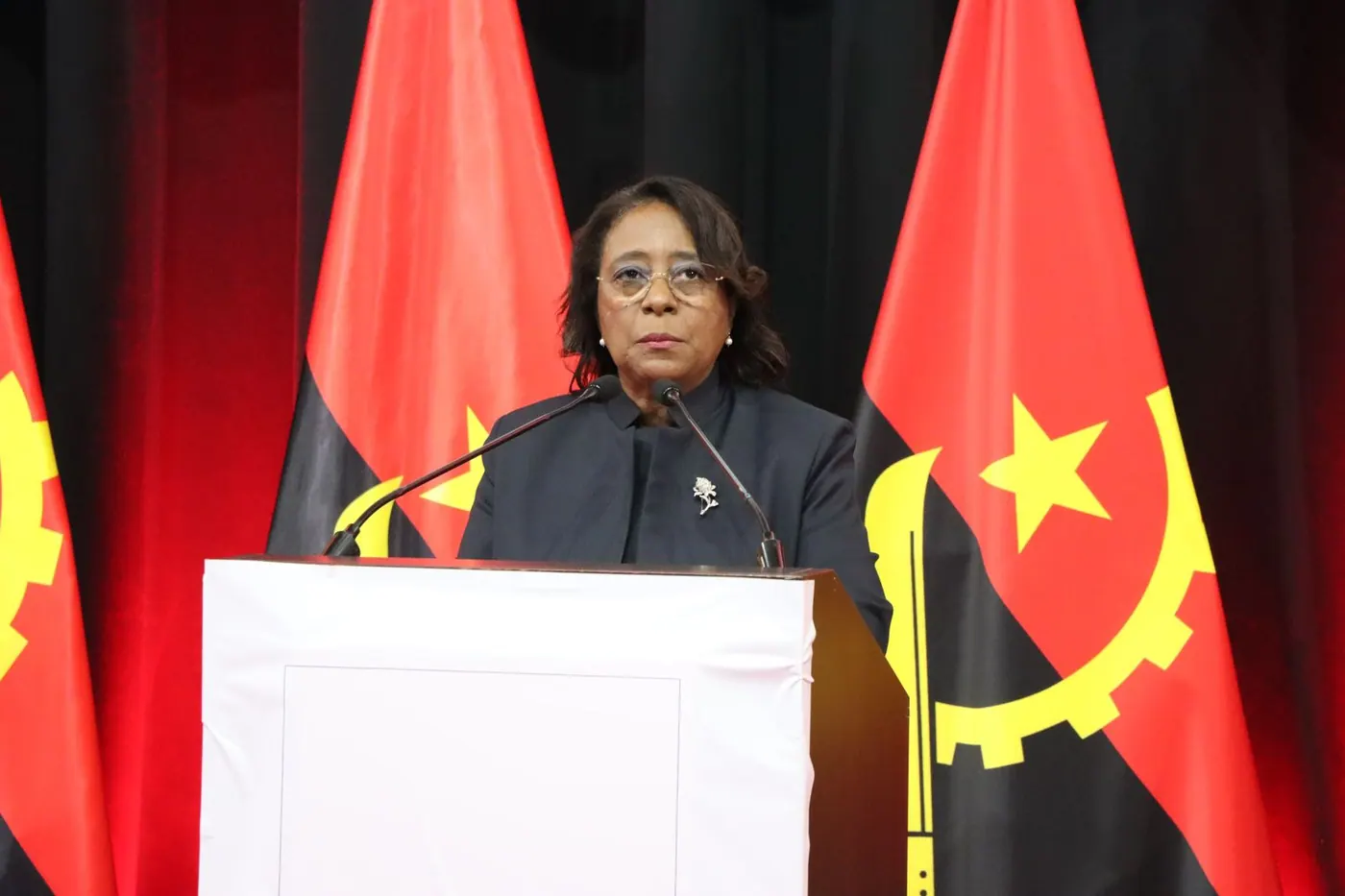
Address by the Minister of State for Social Affairs, Maria do Rosário Bragança.
It is a great honour for me to represent His Excellency the President of the Republic, João Manuel Gonçalves Lourenço, at this solemn ceremony marking the 18th anniversary of the institutionalisation of the Constitutional Court, a date that reminds us of the history of the birth of full constitutional jurisdiction, which began in 2008, after long years in which the powers of a constitutional court were exercised by the Supreme Court, from 1992.
I convey to the Constitutional Court the congratulations of His Excellency the President of the Republic on this special anniversary, which signifies, for the whole country, a journey marked by its contribution to building democracy and politically strong institutions, as well as to strengthening legal culture among judges and prosecutors, lawyers, researchers, students and ordinary citizens, having always acted with balance between the exercise of its power to rule at last instance on constitutional matters and the limits imposed on it by the Constitution itself.
The Constitutional Court is made up of people, and for that very reason these congratulations are also addressed to the Honourable Justices, both serving and retired; to the advisers, administrative staff and all those who, with great ability, integrity, pride and judicial professionalism, have contributed or are contributing to building the prestige of this specialised body, which upholds the highest of the principles of Law, namely the principle of the dignity of the human person.
Ladies and Gentlemen
The celebration of 18 years of the Constitutional Court's existence should be a moment of profound reflection on its path, which is intertwined with the very process of improving the democratic State based on the rule of law in the country.
The Constitution is not merely a legal text. It represents a national pact. It is the legal expression of the fundamental values, principles and aspirations of a society. It is the instrument through which a Nation defines the rules of collective coexistence, establishes the limits of power and protects human dignity as the supreme value of the legal order.
For that reason, in any truly democratic State, the Constitution must be protected by solid, independent institutions endowed with sufficient moral and legal authority to ensure its supremacy and applicability.
It is precisely in this context that the historical relevance of the Constitutional Court emerges, which over these 18 years has fulfilled the mission of guardian of the Constitution in the process of consolidating the State at every stage of its life, ensuring that the exercise of public power remains bound by constitutional principles and fundamental values.
The work of the Constitutional Court has helped to consolidate citizens' legal confidence and certainty, strengthening the guarantees of each person's rights. However, it should be stressed that the function of a Constitutional Court, anywhere in the world, goes beyond adjudicating cases brought on appeal by citizens for alleged violation of the Constitution.
Constitutional courts around the world are, by nature, institutions for the defence of democracy. They are spaces that guarantee freedom. They are instruments for restraining the excesses of power. They are, ultimately, one of the highest expressions of modern legal civilisation. It is at this level that the Constitutional Court stands.
Contemporary history shows that there are no solid democracies without strong institutions. There are no strong institutions without a constitutional culture. And there is no constitutional culture without citizens who are aware of their rights, their duties and the responsibilities that arise from life in society. Therefore, when we analyse the challenges of the present, we are called upon to understand that defending the Constitution is not a task exclusive to the courts. It is a collective responsibility, in which schools, universities, civil society, professional associations, church authorities and the State's other social partners also take part.
Excellencies, Ladies and Gentlemen
Democracy is not preserved by inertia. Democracy requires permanent vigilance, credible institutions, transparency and accountability, and it requires respect for constitutional legality. In an international context marked by rapid technological, economic and social change, new challenges are likewise emerging for constitutional jurisdiction.
-
Issues relating to artificial intelligence, the protection of personal data, freedom of expression on digital platforms, the rights of future generations, climate change, the future of Constitutional Procedural Law, the duty to enforce their judicial decisions, respect for legitimacy obtained through a democratically conducted electoral process and new paradigms of citizen participation in political life pose unprecedented challenges to constitutional courts.
-
The Constitution remains the guiding beacon. However, constitutional interpretation increasingly requires capability, scientific rigour and deep constitutional sensitivity in order to respond to the demands of a society in constant transformation.
It is precisely in this area that deepening the dissemination of the Constitution throughout Angolan society, and the dialogue between constitutional justice, ordinary court justice, academia and scientific research centres, take on particular relevance.
The Constitution is a living reality that requires permanent reflection. For this reason, the aim of this celebration to encourage academic and institutional dialogue on the contemporary challenges of constitutional jurisdiction deserves particular mention.
This is an initiative that honours the tradition of the world's great constitutional courts and reinforces the role of the Angolan Constitutional Court as an institution that produces legal knowledge and promotes constitutional culture.
The great challenges of in-depth studies, scientific analysis and refinement of the grounds for the decisions of twenty-first-century constitutional courts increasingly require international interaction. An example of this is Angola's frequent participation, through the Constitutional Court, in the high-level meetings of the presidents of Supreme Courts, Constitutional Courts and Constitutional Councils, which aim to reinforce commitment to justice based on the Constitution, the laws and international law, to strengthen judicial cooperation and to promote the sharing of experience among the highest judicial bodies of African States and of other continents.
Excellencies, Ladies and Gentlemen,
As we celebrate this important date for the Constitutional Court, it is fair to acknowledge that the value earned by the Constitution and the laws upheld by the courts is always a collective achievement. No institution grows stronger in isolation. Progress results from the interdependence of functions, constitutional respect for the powers assigned to each body and the sharing of a common purpose: to serve the national interest based on the Fundamental Law, the so-called Supreme Law.
Allow me to conclude this message by highlighting the firm commitment of the Nation's Highest Magistrate to strengthening State institutions, promoting democratic legality, transparency in the management of the common good, the struggle to maintain national unity, peace, sovereignty, representative and participatory democracy and social justice, especially in vital areas such as access to health and education, and the representation of Angola on the African continent and in the world.
The sustainable development of a Nation requires institutional stability, and this demands respect for the Constitution. It is through respect for constitutional norms that independent, credible institutions capable of fully performing their functions are strengthened.
It is in this context that we wish the Constitutional Court to continue to play its irreplaceable role of preserving the democratic constitutional order and citizens' confidence in swift and, consequently, timely and justly beneficial justice.
Obviously, the work does not end here. There is clearly a commitment, required by the Constitution, to continue improving constitutional justice in the country, to deepen citizens' democratic culture and to ensure that future generations find institutions that are more consolidated and closer to citizens.
It is our collective wish that the Constitutional Court continue to be this benchmark for the materialisation of Constitutional Justice in the country and an indispensable forerunner in defending the will of the people and the well-being of citizens.
Thank you very much!