
Translated from Portuguese. The Portuguese version prevails. Ler em português
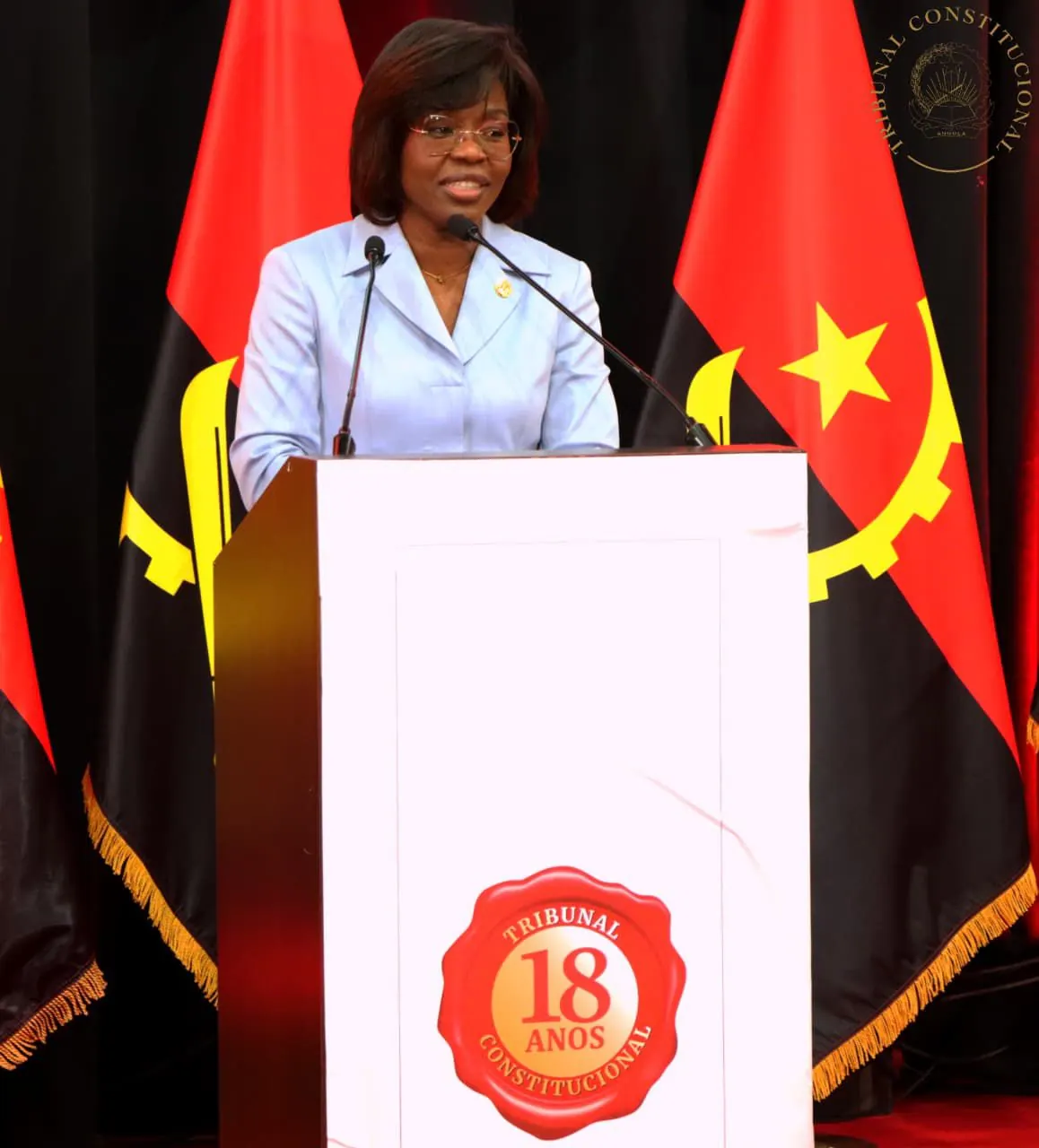
Address by the President of the Constitutional Court, Justice Laurinda Prazeres.
Today, 17 June 2026, the Constitutional Court completes 18 (eighteen) years since its institutionalisation, in accordance with Law No. 2/08 and Law No. 3/08, both of 17 June. It is not one anniversary among others, but a milestone. And it is, above all, an occasion also to render account.
Taken by analogy with a natural person, institutional coming of age designates the moment at which the Court ceases merely to exercise the capacity to enjoy its rights and begins, in full, to discharge the duty of defending the framework of principles and purposes of the Constitution of the Republic. But there is another, simpler way of describing this moment: at 18, an institution can no longer be content with what it has inherited; it must show what it does with what it has received.
However, even before we speak of the institution we are today, it is important to acknowledge those who laid its first foundations.
Institutions are not born complete; they are built by the vision, the courage and the sense of mission of those who agree to open up paths not yet travelled.
The first Justices received an institution without precedent in Angolan constitutional history. It fell to them to turn rules into institutional practice, to confer authority on a newly created jurisdiction and to affirm, through the first decisions, that the Constitution had an effective guardian. That is no ordinary task. It is a founding task.
Allow me to name them, because naming is the first form of institutional gratitude: Rui Constantino da Cruz Ferreira (founding President); Agostinho António Santos; Efigénia Mariquinha dos Santos Lima Clemente; Luzia Bebiana de Almeida Sebastião; Maria da Imaculada Lourenço da Conceição Melo; Miguel Correia; and Onofre Martins dos Santos.
In recalling their names, we pay tribute not only to the persons, but also to the spirit of public service, the sense of mission and the institutional courage that marked the first steps of this Court because, although institutions are made of rules, they are consolidated through the people who bring them to life.
EXCELLENCIES,
The Constitutional Court was institutionalised on 17 June 2008 and, 8 days later, these 7 (seven) Justices took office. A few weeks later, this newly established Court was called upon to conduct the legislative elections of 5 and 6 September of the same year. It was a test of maturity applied to a newborn institution. In the history of the African Countries with Portuguese as an Official Language, no other Constitutional Court has held elections in the very year in which it was established. That is why we say it plainly, and we say it with reverence for those who made it possible: this Court is a child that was born an adult.
The 1st Judgment was handed down on 30 June 2008 – five days after the swearing-in. The Court was born and immediately set to work. There was no preparatory phase. There was no period of adaptation. There was, rather, a DUTY to fulfil.
In view of all that has been set out here about the Honourable retired Presidents of this Constitutional Court, we now come to the present.
EXCELLENCIES
In eighteen years, this Court has conducted 4 (four) electoral cycles, namely 2008, 2012, 2017 and 2022 – under documentary conditions whose scale is hard to imagine without having worked within these walls.
In 2008, the newly deployed industrial digitisation infrastructure was equipped to process up to 1.7 million documents in four days.
In 2012, 29 (twenty-nine) parties and coalitions submitted candidacies within the normal period; another 29 (twenty-nine) within the period for remedying deficiencies.
In 2017, the operation was consolidated with the Candidacy Assessment Platform and with dedicated training material delivered to the political formations. In 2022, the digital appointment-booking portal was put in place, ensuring parity, anonymity and compliance with the Data Protection Law, and the authorised representatives physically signed the documentation delivery forms.
To this path, marked by the affirmation of independence, consistency and institutional credibility, is added another equally revealing indicator of the intensity of this Court's judicial activity: in June 2025, the Court handed down Judgment No. 1000. This number does not merely represent the chronological succession of decisions; it symbolises a body of case law built judgment after judgment, with the rigour, deliberation and sense of responsibility that constitutional jurisdiction demands. A large part of that body of case law has resulted from the examination of Extraordinary Appeals on Grounds of Unconstitutionality, an instrument which, by its nature and scope, has established itself as one of the most important mechanisms for protecting fundamental rights and fulfilling the constitutional mission of this Court. Indeed, the REI accounts for 56.83% of the decisions handed down by the Constitutional Court.
With its judicial function thus set on course, the Court understood that guarding the Constitution did not mean only interpreting it. It also means bringing it closer to citizens.
Imbued with that purpose, successive constitutional literacy initiatives were born: the Constitutional Court thus developed the Constitution for Children in comic-strip form; institutionalised “Conversas sobre o Constitucionalismo Angolano” (Conversations on Angolan Constitutionalism); created A Guardiã, an academic journal intended to promote research, critical reflection and legal and constitutional debate; and also institutionalised guided visits for students and institutions, opening the doors of the Court to the ordinary citizen.
It also promoted the translation of the Constitution into 9 national languages and into Braille, fostering conversations about the Fundamental Law in communities, ensuring inclusion, equal opportunities and the effective protection of minorities.
In June 2025, exactly one year before this moment, the Constitutional Court inaugurated the Gallery of Angolan Constitutionalism, a public space, accessible to the ordinary citizen, dedicated to preserving the historical and legal memory of the Nation through the conservation and exhibition of documents, symbols and items that portray the genesis and development of Angolan constitutionalism.
But this mission of bringing the Court closer to citizens requires, first and foremost, an institution capable of keeping pace with the evolution of knowledge, of technology and of the demands of the present time. The quality of constitutional justice does not depend solely on the soundness of its judgments; it depends equally on the constant scientific and technical updating of those who prepare them, support them and give effect to them. In a constitutional jurisdiction, continuous training is not an institutional luxury; it is a condition of quality, efficiency and credibility. It was with this conviction that the Constitutional Court has, in recent years, invested in the development of its judges, advisers and staff. In 2024, and throughout 2025, this House provided internal training in electronic correspondence management and electronic case handling, directed especially at the Justices and their respective advisers.
This year – and I say so with the sobriety that the occasion demands – 90 (ninety) members of staff of the Constitutional Court completed specialised training in Artificial Intelligence, in its ethical use and in prompt engineering techniques. According to the information available to date, it is the first initiative of its kind carried out in an Angolan public institution. I mention it not so that we may be praised for it, but because these 18 years of a constitutional jurisdiction are also measured by what it does with what it has received. And what we received was the obligation not to arrive late to the times in which we live.
The road ahead is long. There remain situations that, in some way, weaken constitutional justice, and others that call for in-depth reflection on the part of judges, researchers, the academic community and legal practitioners.
I refer, in particular, to the procedures for giving effect to the decisions of this Court; to the interpretation of the concept of conformity of the decision provided for in Article 47(2); to the need, or otherwise, to introduce filtering mechanisms for the REI; to the absence of exceptions to strict compliance with the principle of prior exhaustion of the chain of appeals; and to the indispensable examination of the facts in particularly complex cases, where what is at stake is the assessment of unconstitutionality with regard to principles, rights or guarantees of citizens.
EXCELLENCIES
Allow me, at this point, an expression of thanks that can be voiced by no one other than whoever stands at this rostrum.
None of what has just been said is achieved alone. The elections of 2008, 2012, 2017 and 2022 were conducted by teams, sometimes invisible, almost always anonymous, who worked twenty-four hours a day, in rotating shifts, for weeks. In 2008 there were two hundred and twenty people. In 2012, one hundred and sixty. In 2017, one hundred and thirty – now formally selected from among four hundred applicants, with competence tests and biometric time-keeping. In 2022, smaller technical teams, but qualitatively better prepared, with e-learning training, which made it possible to identify the best – not in absolute terms, but the best for each functional sector.
To these people – the staff of the Constitutional Court, technical teams, secretariat, the political parties office, the communication office, physical security teams, information technology teams, administrative and financial teams, drivers, all those who make this building function every day – this Court owes much of what this Court is today.
The Justices hand down judgments, but there is silent, continuous and demanding work that sustains each decision set out in a judgment. That work has a face, has a name, has hours that no one sees. That is why they are recorded here – THANK YOU VERY MUCH, Excellencies, “Os Transparentes” (the Transparent Ones).
EXCELLENCIES
Throughout these 18 (eighteen) years, the Constitutional Court has also sought to draw closer to the academic community, in the understanding that constitutional reflection is not confined to the courtroom. Scientific research, critical thinking and academic debate are indispensable partners in the continuous improvement of constitutional jurisdiction.
The legal and constitutional reflection carried out in classrooms and research centres nourishes the quality of the case law handed down here; and the case law of this Court, in turn, gives back to the academy living material on which to think and carry out research. It is a dialogue that enriches us mutually and which this House wishes to deepen. It is in this meeting between case law and the Academy that a true constitutional culture is strengthened, not as a civic ornament, but as a foundation of democratic life.
No constitutional institution fully accomplishes its mission in isolation. The separation of powers, as a structuring principle of the Democratic State based on the Rule of Law, does not mean a lack of communication between the organs of sovereignty. On the contrary, it requires a permanent institutional dialogue, founded on mutual respect for the powers constitutionally conferred on each of them.
It is in this spirit of constitutional cooperation that the Court has developed institutional relations with the other organs of the State, always preserving its independence in decision-making, but recognising that good constitutional governance requires institutional interoperability and a permanent culture of cooperation.
For this reason, too, we express here, with equal appreciation, our thanks to public and private institutions and to civil society: to the National Assembly, to the Presidency of the Republic, to the Superior Council of the Judiciary, to the Attorney General's Office (PGR), to the Angolan Bar Association (OAA), to the National Electoral Commission (CNE), to the Ministry of Territorial Administration (MAT), to the Ministry of Justice, to the Public and Private Universities, and to civil society organisations.
This same openness to dialogue and mutual learning has guided our action at international level.
The strengthening of these relations reinforces our certainty that the noble task of guarding the Constitution also involves listening to and understanding the way in which other constitutional jurisdictions fulfil the same mission. After all, protecting the Constitution also means learning from those who, in other latitudes and realities, devote themselves to defending the same constitutional values.
I therefore thank our international peers, in particular the Conference of Constitutional Jurisdictions of Africa and the Conference of Constitutional Jurisdictions of Portuguese-Speaking Countries, whose presidencies we have had the honour of holding, and the World Conference on Constitutional Justice — for the strengthening of the ties of institutional cooperation. And now – what comes next? –
EXCELLENCIES
If the first 18 (eighteen) years were devoted to institutional consolidation, the coming years will necessarily be devoted to responsible innovation. The future is technological. Saying so is so obvious that it seems almost unnecessary, but saying it from this rostrum, on the 18th anniversary of this Constitutional Court, is to make a commitment, and commitments must be made publicly; to commit oneself, here, means to bind oneself publicly.
The 2027 general elections will be the first Angolan electoral cycle held in a world of universal generative Artificial Intelligence. Synthetic documents indistinguishable from genuine documents; deepfakes of judges announcing non-existent decisions; audio recordings attributed to judges discussing how they will vote; coordinated disinformation campaigns attacking the legitimacy of the Courts; submissions on an industrial scale that could, in theory, paralyse the human capacity for analysis. All of this is documented in other jurisdictions – from Slovakia to India, from Bangladesh to Brazil, from the United States to Hong Kong. It is not, therefore, a remote hypothesis; it is the present in other parts of the world and, judging by the signs of the times, it will certainly be the near future among us.
It falls to this House to be prepared, and we will do everything to rise to the occasion. In addition to a set of structural initiatives aimed at defending the integrity of the constitutional process, procedures are under way aimed at Sovereign Artificial Intelligence systems for the Constitutional Court, operated on local and isolated infrastructure, protected against prompt injection and against the attacks that this new generation of technologies makes possible; an intelligent historical database that unifies everything processed by this Court from 2008 to 2022 and cross-references it, by means of intensive computing capacity, with official external databases; and a tripartite operating model. * But there is a question greater than technology.... * Constitutions cannot change their principles, but they have a duty to adapt to the times. 39. This is the defining tension of the constitutionalism of the near future. Human dignity does not change. Equality before the law does not change. The separation of powers does not change. The subordination of the State to the Law does not change. Fundamental rights do not change, or change only to expand, never to diminish. These are the principles. And they are not at the disposal of any passing majority, any technological advance or any political circumstance. They are, by definition, prior to all of that.
But the way in which those principles are given concrete form – that, indeed, must keep pace with the times. The right to privacy of 1992 is not technically the same as the right to privacy of 2026, although it is the same principle. Freedom of expression does not change – but what threatens freedom of expression in 2026 is different from what threatened it in 1992. The right to information does not change – but what constitutes information in an ecosystem of content generated by artificial intelligence is a new question. The presumption of innocence does not change – but the way in which a synthetic video can compromise that presumption is a new form of threat.
For all these reasons, and more, it falls to the Constitutional Court – and it falls to it expressly – to preserve the principles and renew their language.
What is already beginning to be called Digital Constitutionalism is no small task. It is perhaps the greatest task of constitutionalism in the coming decades, and one that this Court will not be able to avoid.
I close, then, as we began: with the eighteen years of this House.
In celebrating these eighteen years, we are not celebrating merely the time that has passed. We are celebrating the capacity of an institution to remain faithful to its principles while keeping pace with the evolution of society. That is perhaps the true mission of a Constitutional Court: to ensure that the Constitution remains contemporary without ever ceasing to be permanent.
Mindful of the certainty of the time limits of the constitutional terms of office of most of the Justices as of today, a word to those who will succeed us – to the Justices who will sit here after us, to the Presidents who will be appointed after this term of office, to the staff who will continue to make this building function when this generation is no longer here: we intend to leave a Court that is more mature, more humane, more technologically sovereign, more open to the citizen, more aware of its international role and – if this commitment is fulfilled – better prepared to defend the principles of the Constitution at a time when the form of those principles will be permanently called into question by technology. * This is the legacy we received. This is the legacy we intend to hand back. And between receiving and handing back lies our mission. * The greatest duty of a Constitutional Court is not to guard the Constitution. * It is to ensure that every citizen feels it to be his or her own.
This was the duty that this Court received in June 2008; this is the duty we continue to discharge on 17 June 2026. And this is the duty that, in whatever form each age may require, we wish to pass on intact – principles intact, language renewed.
* Blessed be the eighteen years of the Constitutional Court. * Blessed be all those who came before us. * Blessed be the Angolan people, in whose name we exist. * Blessings upon you all.
Thank you very much for your attention.