
Translated from Portuguese. The Portuguese version prevails. Ler em português
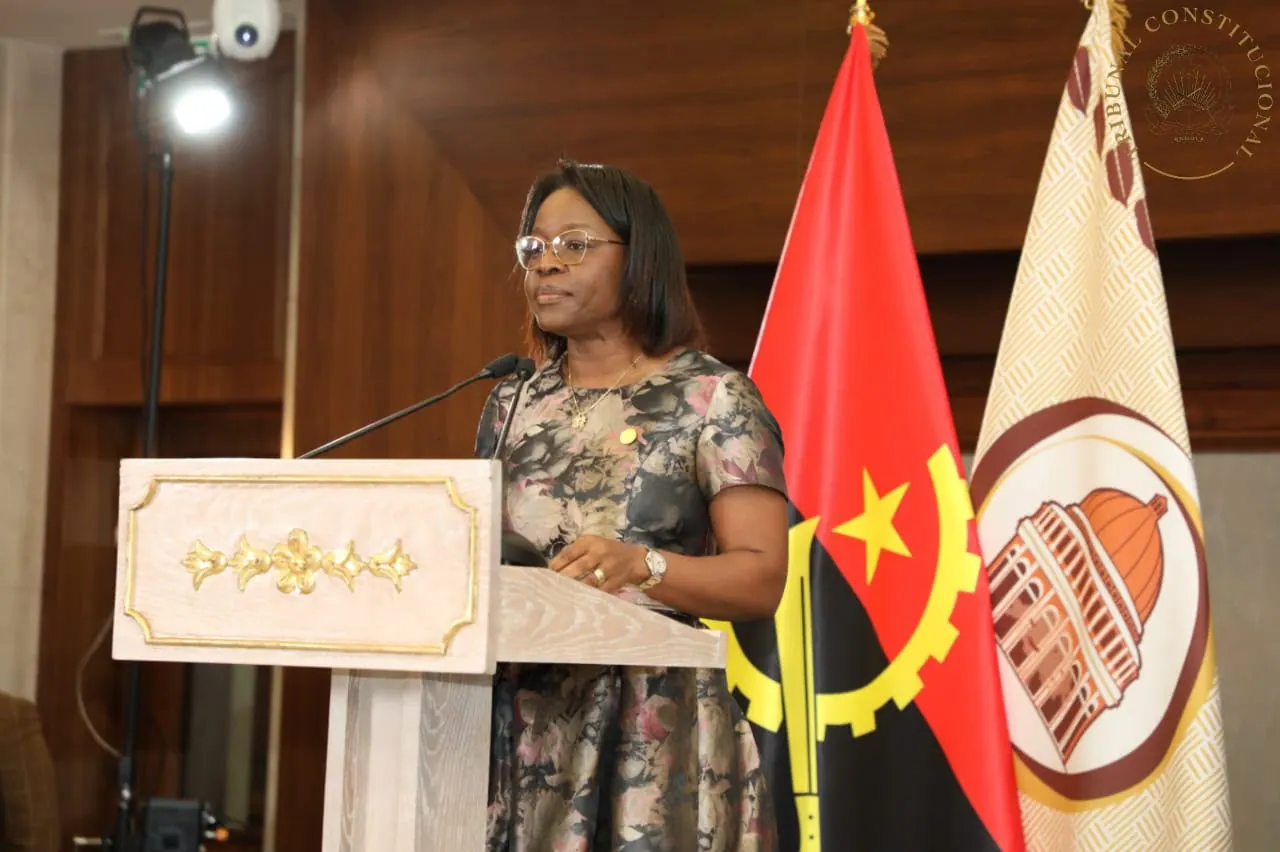
Read in full the address by the President of the Constitutional Court, Justice Laurinda Prazeres, at the Round Table on the Role of African Women in Interaction with Communities.
His Excellency the President of the National Assembly, Dr Adão Francisco Correia de Almeida, Honourable Members of Parliament, Ladies and Gentlemen, Distinguished Participants,
A word of appreciation and thanks to the Group of Women Parliamentarians and, in particular, to the President of the National Assembly, Dr Adão de Almeida, for organising the event and for the invitation.
With reference to African Women's Day, celebrated on 31 July, allow us a few remarks to set this commemoration in context. This Day, established in 1962 during the Conference of African Women in Dar es Salaam, Tanzania, pays tribute to the struggle, resistance and contribution of African women in building their respective countries and in defending peace, democracy, human rights and the development of the continent.
The date prompts us to reflect on the value of the role of African women in the family, in the community, in the economy, in politics and in peace processes. It also reminds us of the Challenges: strengthening the commitment to gender equality, ending gender-based violence, and access to education, health and economic opportunities.
That is why certain words, spoken in this chamber, carry particular weight. One of them is the word HOUSE. We are, at this moment, in a house: the House where the will of the Angolan people is transformed into law. And it is from this word that I invite you to reflect on the role of African women in their interaction with communities.
For African women have always known something that we sometimes forget: that a people is sustained by 3 (three) houses, and that these three houses only remain standing when someone connects them. In each of them, I ask you to note, we shall find the same presence.
The first house is the COMMUNITY – it is the house of life, where one is born, teaches, learns and belongs. Within it, in every home, someone lights the fire at the end of the day. Someone teaches the child the first limit, the first sense of right and wrong. Someone settles the dispute before it becomes a conflict. Look closely at that person. Almost always, it is a woman.
There is a woman in this house. And it is from her that we receive the first lesson in law that any human being will ever receive. Long before the code, long before the court, there is a jurisdiction that operates around the fire, and it is a woman who presides over it.
The second house is the house of JUSTICE. For centuries, in Africa, justice was not written on sheets of paper: it was fulfilled through the spoken word. The word given, the elder heard, the conflict resolved without breaking the bond that unites people.
Who kept that word? Who passed it on from generation to generation, on the path to the spring, in the privacy of homes? There is also a woman's intervention in this house. Today we call this mediation, restorative justice, reconciliation. We give it modern names and cite them at conferences. But we are, in truth, rediscovering an art that African women never abandoned: that of doing justice without destroying the community.
And now to the third house, the house of LAW, where today you honour us with your audience. Here, the will of the people becomes norm. Here it is decided whether the other two houses will have the means to fulfil what they promise. For a long time, this house had few women. Today the number is greater, as is only right, and each new name strengthens our legal culture and consolidates the Democratic State based on the Rule of Law.
For here too, increasingly, we can say, with pride and without fear: women fulfil their role, in their own full right.
From a legal perspective, this reflection does not remain a metaphor; the international community has gradually built major instruments for this cause: the Convention on the Elimination of All Forms of Discrimination against Women, of 1979, the principal international treaty on women's rights; the United Nations Declaration on the Elimination of Violence against Women, of 1993; and the Maputo Protocol, of 2003, the most comprehensive African instrument for the protection of women's rights.
In Angola, this subject of the protection of women is grounded in the Constitution of the Republic itself. Article 23 enshrines the principle of equality, and subparagraph (h) of Article 21 includes among the fundamental tasks of the State the promotion of equality between men and women. The role of African women in the house of law is therefore not a concession: it is a fundamental right that our Supreme Law recognises for them, and which it falls to all of us, as guardians of legality, to enforce.
A Democratic State based on the Rule of Law is measured not only by the norms it writes, but by those who, every day, interpret them, apply them and do justice through them. And it is this task, increasingly shared between women and men in equal dignity, that truly sustains the house.
Indeed, we have glimpsed the essence of the three houses, that is, the Community, Justice and the Law, and in all of them we found the same presence connecting them. The African woman is the common courtyard between the three houses.
She is, therefore, the link that prevents them from drifting apart. Let us draw on the sovereign word that gives this link its name: UBUNTU. I am because we are.
No one fulfils themselves alone, and my dignity depends on yours, which, moreover, inspires the backbone of the framework of principles of our Constitution of the Republic when, in its Article 1, it provides: “Angola is a sovereign and independent Republic, based on the dignity of the human person and the will of the Angolan people.”
Thus, we may even say that, when the law forgets ubuntu, it becomes a closed house, full of rules and empty of people. When the law remembers ubuntu, it becomes what women have always known it should be: a place where the whole community fits.
That is why the reflection I put before Your Excellencies, dear Women, Distinguished participants, is not addressed to one parliamentary group: it is addressed to all, because the three houses belong to everyone; they belong to the PEOPLE. Let us make the African woman the
recognised guardian of citizenship in our communities. Let Parliament legislate to open the way for her. Let the Executive give her the means. Let the justice system recognise her as an ally. Let society not leave her alone.
Since at the beginning of my address I highlighted the word house, allow me to close with a request: that none of our three houses should live with its back turned to the others, and that we should recognise, without fear, who has always kept them connected.
In every house of our people, there is a woman.
Let us ensure that in every house of our law there is one too, and that this chamber, the House of the will of the people, may always bear witness to it.
Thank you very much for your attention.