Translated from Portuguese. The Portuguese version prevails. Ler em português
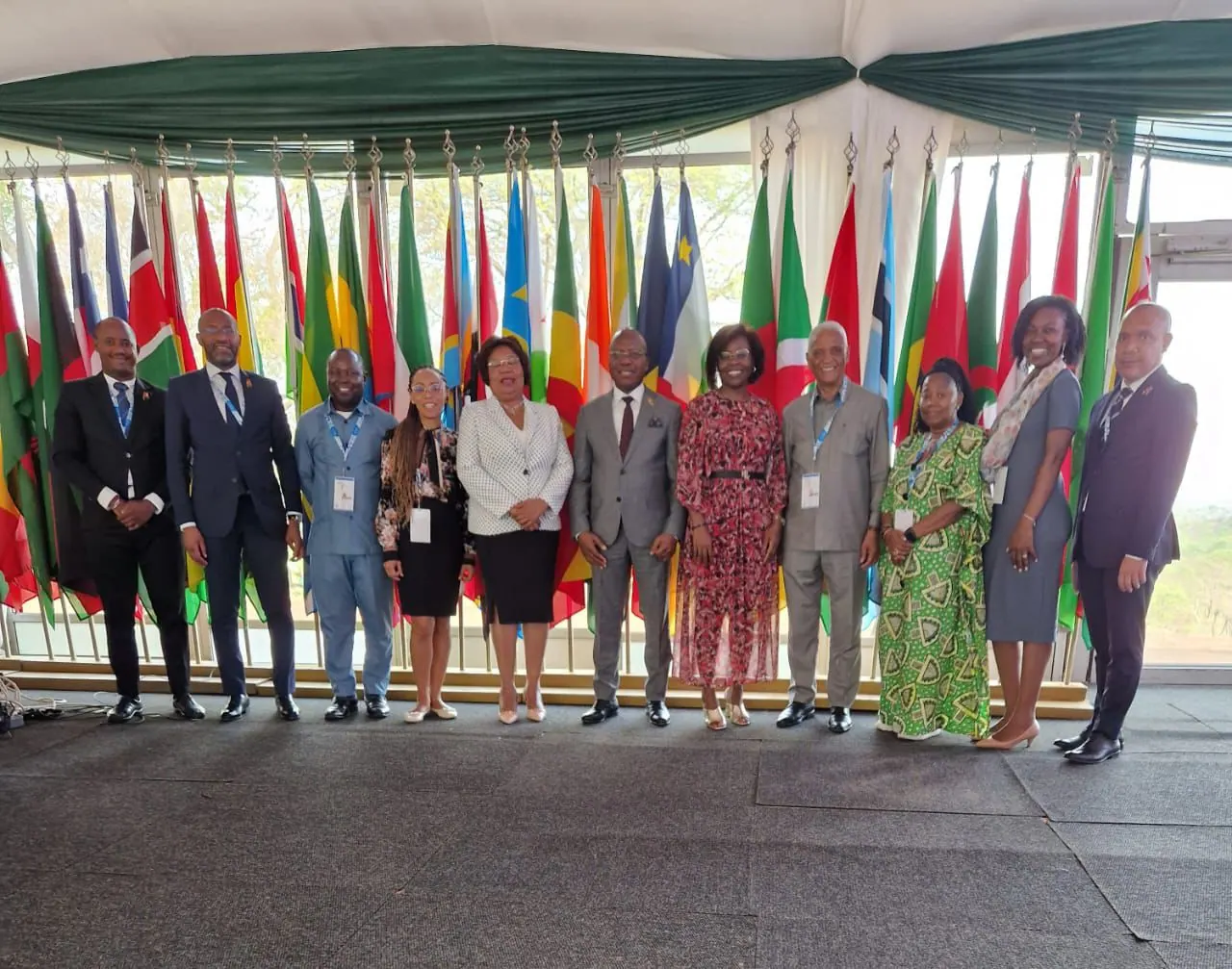
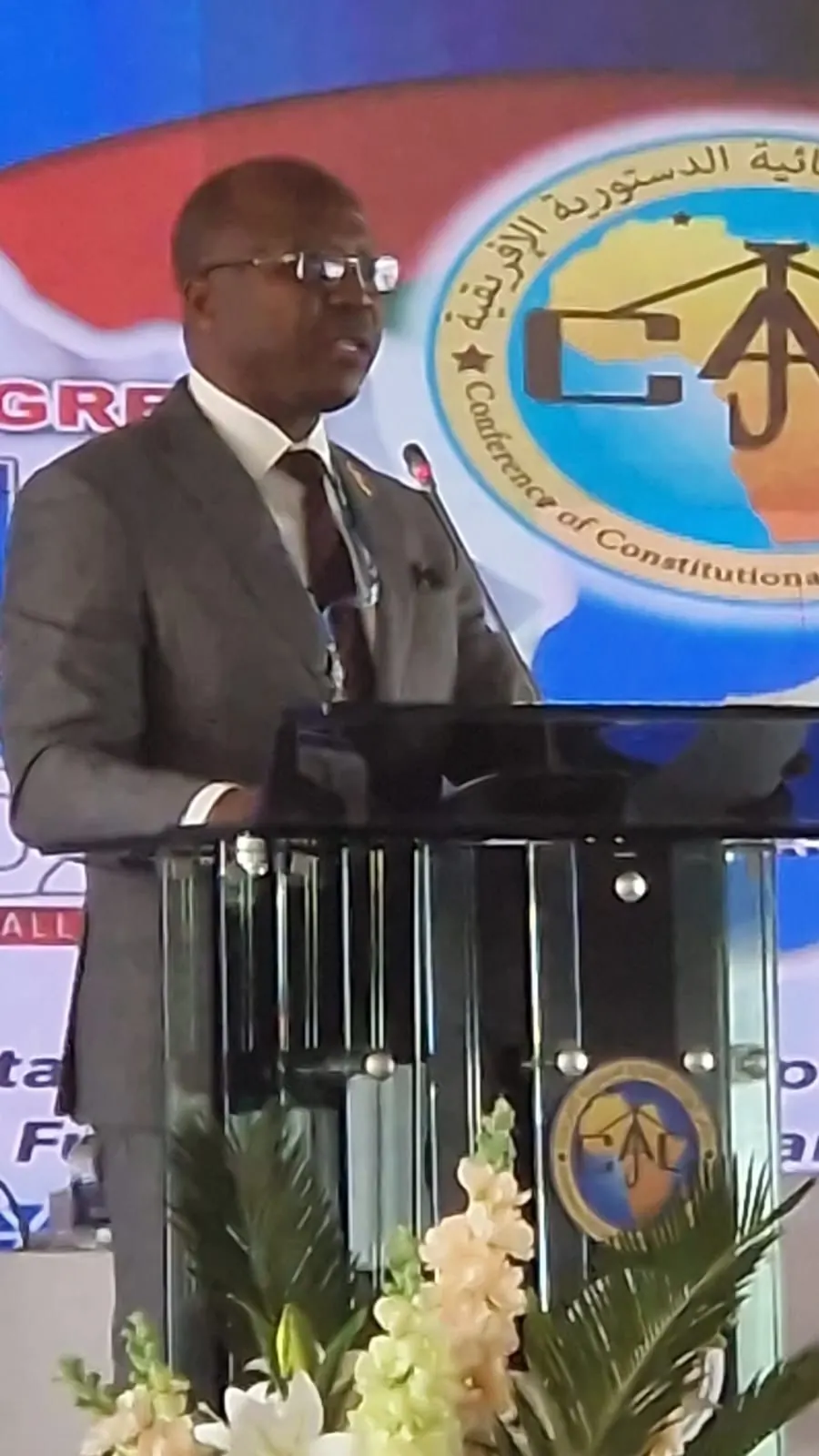
Continuing the proceedings of the 7th Congress of the Conference of Constitutional Jurisdictions of Africa, which the Republic of Zimbabwe has been hosting since 30 October, Justice João Carlos Paulino of the Constitutional Court addressed those present on The Role of the Judiciary in the Protection of Fundamental Rights and Human Dignity in Africa.
The address by Justice João Paulino, in full
Excellencies, Distinguished participants,
It is with deep satisfaction that we take on the responsibility of speaking briefly on “The Role of the Judiciary in the Protection of Fundamental Rights and Human Dignity” at this 7th Congress of the Conference of Constitutional Jurisdictions of Africa (CJCA).
In setting out to offer some brief considerations on the Role of the Judiciary in the protection of fundamental rights and human dignity, one problem immediately stands out which, like a pandemic, has affected States all over the world, and Angola is no exception: Corruption. It is a disease that must be fought through combined efforts. It is a satisfaction to be able to say that Angola has been fighting for this cause, including by ratifying international instruments to combat corruption, money laundering and other offences.
However, I invite those present to consider possible borderline situations and issues that potentially infringe fundamental rights and human dignity in the name of the fight against corruption. I refer to the Reversal of the Burden of Proof in Confiscation and Human Dignity.
All over the world, and Angola is no exception, legislative measures have been adopted in compliance with the Recommendations arising from the international conventions ratified by Angola, such as the African Union Convention on Preventing and Combating Corruption, or those arising from the Financial Action Task Force (GAFI) on international standards on combating money laundering and the financing of terrorism. It was in this context that Angola approved Law No. 15/18 of 26 December – Law on the Coercive Repatriation and Extended Confiscation of Assets – and introduced into the Penal Code, approved by Law No. 38/20 of 11 November, the concept of loss of assets, or confiscation.
Confiscation is a criminal-policy measure leading to the definitive deprivation of assets derived, directly or indirectly, from criminal activity, ordered by a Court or other competent authority as a result of proceedings relating to one or more unlawful acts.
This form of extended confiscation allows all the assets of the offender that are not consistent with his or her lawful income to be presumed to derive from criminal activity, thereby reversing the burden of proof.
Excellencies, Ladies and Gentlemen
Although it is recognised that extended confiscation is a necessary evil, we will all certainly agree that it must be used carefully, respecting the constitutionally guaranteed fundamental principles and rights, in particular the presumption of innocence and human dignity, lest the remedy become more harmful than the disease itself
The protection of fundamental rights, as well as respect for the principle of human dignity, constitute one of the most important, if not the most important, achievements of modern States, insofar as it is through them that the consolidation of the Democratic State based on the Rule of Law has become possible. In this sense, the effective action of the Judiciary should not be merely a form of declaration of rights, but a means of giving concrete effect to human dignity. It is, therefore, at this point that the judiciary is called upon to intervene, safeguarding respect for the fundamental rights and freedoms enshrined in their constitutional texts.
Practical Examples
-
In 2023, the Court declared unconstitutional, with erga omnes effect, Presidential Decree No. 69/21 of 16 March, which established the Regime for the Share Allocated to the Bodies of the Administration of Justice from the Financial and Non-Financial Assets Recovered by Them, on the grounds that it conflicted with the guarantees of independence and impartiality of the Courts and, consequently, with the principle of fair trial, by creating the belief that the outcome of the proceedings was tainted from the outset through the allocation of that share to the bodies responsible for the prosecution and trial of the offences that generated such financial assets. (Judgment No. 845/23, available at www.tribunalconstitucional.ao)
-
In a recent judgment, the Constitutional Court also examined the constitutionality of the provisions of the Penal Code and of Law No. 15/18 concerning the regime of extended confiscation of assets, in the context of an ordinary appeal on grounds of unconstitutionality (concrete review), a mechanism in which the effects of the decision of the Constitutional Court are confined to the specific case, and, after a careful examination of the matter, concluded that the interpretation of those provisions as applied to the specific case submitted for its consideration did not amount to a violation of the constitutional principles invoked. (Judgment No. 896/2024, available at www.tribunalconstitucional.ao)
Excellencies
Having reached this point, it is important to stress that the mere constitutional provision for fundamental rights and for the principle of human dignity is not enough; it is necessary for African States, through the action of the Judiciary, to guarantee effectively the effective judicial protection of such rights, to ensure the defence of fundamental rights and human dignity, and to repress violations of legality resolutely, since justice may not, under any circumstances, be denied.
Man precedes justice, and justice must be done with respect for human dignity and never in disregard of it.
Thank you very much!
INSTITUTIONAL SUPPORT
And as a good Angolan, the Ambassador Extraordinary and Plenipotentiary of Angola to the Republic of Zimbabwe, Agostinho Tavares da Silva Neto, is tirelessly providing full institutional support to the delegation of the Constitutional Court working in the homeland of Robert Gabriel Mugabe.