
Translated from Portuguese. The Portuguese version prevails. Ler em português
Johannesburg, 4 September 2025.
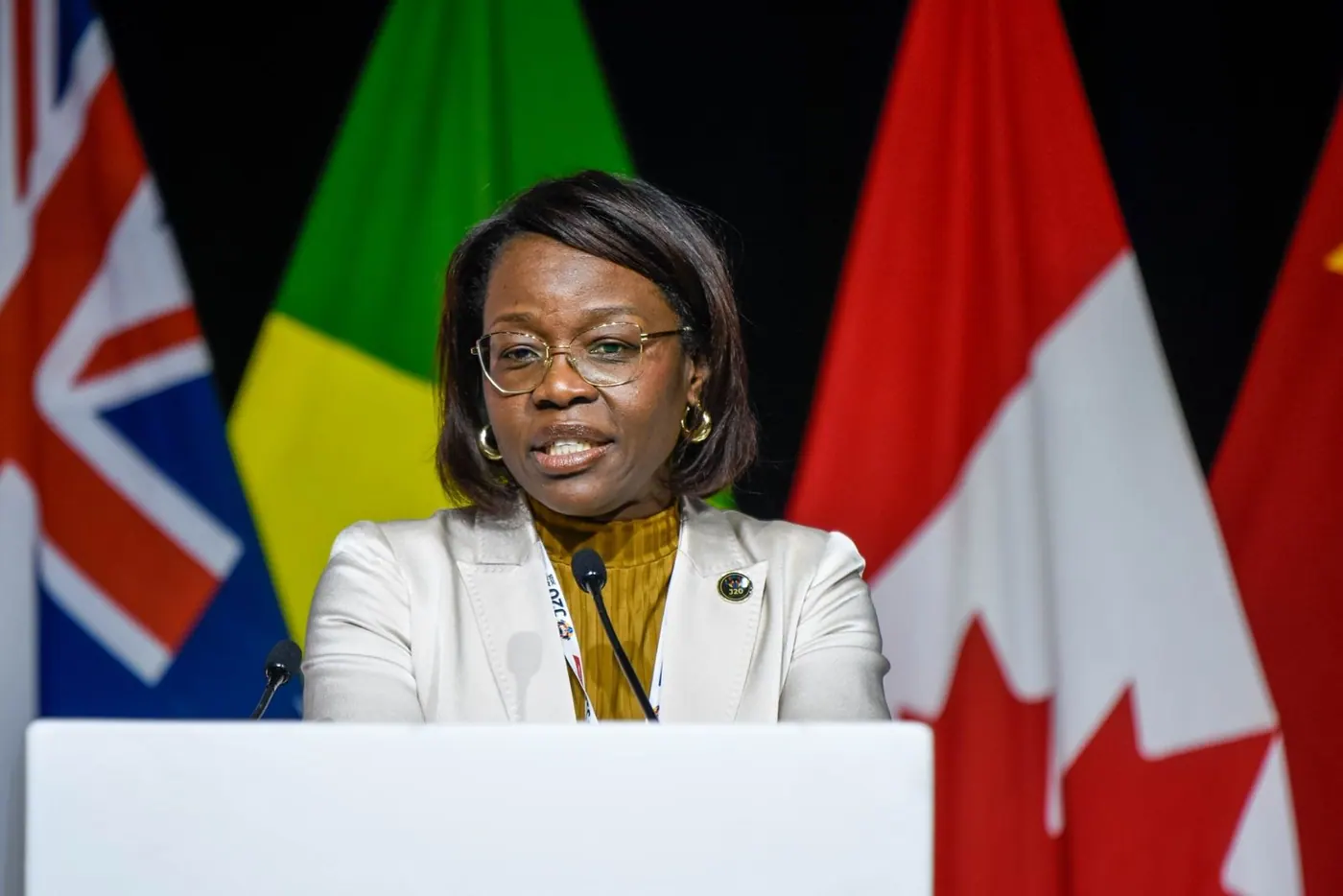
Speaking as moderator at the closing session of the Summit of the Presidents of the G20 Constitutional and Supreme Courts, during which the resolutions resulting from the two days of work were presented, the President of the Constitutional Court of the Republic of Angola, Justice Laurinda Prazeres, made the following remarks:
Most Excellent Presidents of the Supreme and Constitutional Courts, Distinguished Colleagues, Guardians of Constitutional Justice – As Chief Justice Maya said yesterday: “the sentinels of society, those who ensure that the powerful are brought to justice and that the vulnerable find their voice”.
On behalf of the Constitutional Court of Angola and in my own name, allow us a word of appreciation and deep gratitude to our host, the Honourable Chief Justice Maya, and, through her, to the whole team of the Constitutional Court of South Africa and to all those who directly or indirectly contributed to the success of this event – thank you very much for your warm welcome.
This grand event that has brought us together over the last few days is now in its final stretch. Over these days, we have shared experiences, challenges and visions on the transformative role of justice in times of change. Now it is time to consolidate this dialogue into resolutions that reflect our collective commitment.
We have felt here the true meaning of UBUNTU – the African philosophy that teaches us that we exist through others – “I am because we are”; this philosophy must therefore guide our cooperation. We are not twenty isolated courts; we are a global community of constitutional guardians, who must remain united by a sacred commitment to the dignity of the human person.
Indeed, it must be borne in mind that our courts, collectively, influence the lives of more than 2.5 billion people. Every decision we take echoes through generations. Every constitutional interpretation shapes the destiny of nations. This is the magnitude of our shared responsibility.
As we have had the pleasure of witnessing, the theme that brought us together — Independence, Innovation and Cooperation — is not merely a motto. It is a call to action. Judicial independence remains the pillar of democracy, but today it demands the courage to face new threats, from disinformation on social media, to international attacks, such as those the judges of the Federal Supreme Court (STF) are currently facing in Brazil, to the erosion of fundamental rights.
As was emphasised here during the first session, a judge's independence does not place him or her above the law, and as judges we are the guardians not of power but of principles.
Innovation, in turn, is not limited to technology. It includes new ways of interpreting the law, of protecting the vulnerable, and of making judicial systems more accessible and humane. Artificial intelligence, data and digitalisation are tools which, as we saw in our second session, can summarise lengthy pleadings, organise documents and compile data in just minutes, leaving the judge free actually to judge — but the heart of justice continues to beat in the empathy and integrity of our courts.
And cooperation? It has never been more urgent; as we saw in the third session, issues related to climate change demand a joint response, since they do not affect just one State, they affect the world. Constitutional justice knows no borders. The last session made it clear that when we share case law, good practices and solidarity, we build bridges that strengthen the rule of law in all jurisdictions.
Thank you very much.