
Translated from Portuguese. The Portuguese version prevails. Ler em português
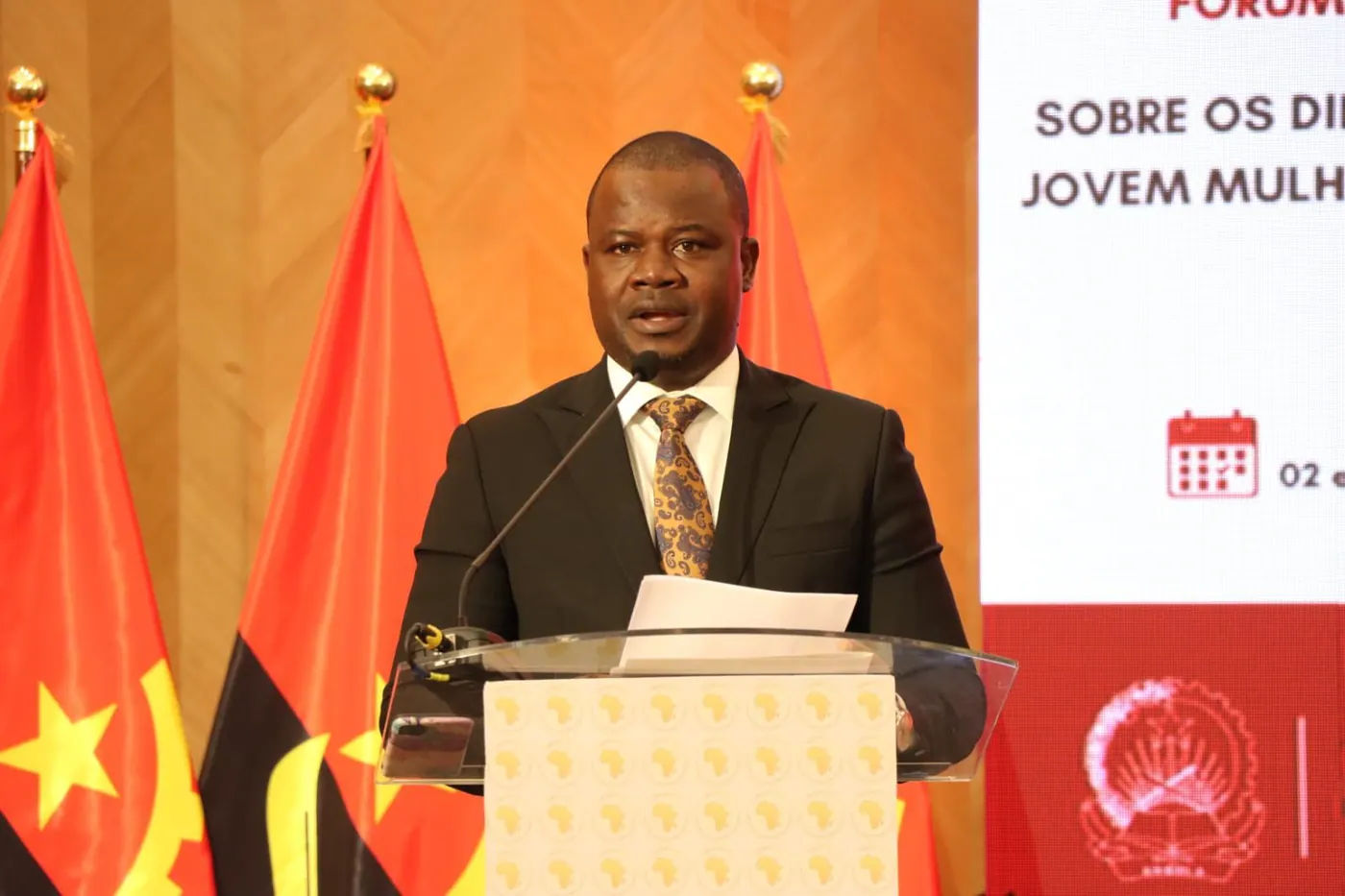
The full text of the opening address of the Constitutional Forum on the Rights of Young African Women and Children, delivered by the Minister of State and Head of the Civil Affairs Office of the President of the Republic, Dionisio da Fonseca
----------//------------
It is with great honour and a sense of responsibility that I address you, representing His Excellency João Manuel Gonçalves Lourenço, President of the Republic of Angola and Chairperson of the African Union, to deliver the opening address of this important forum, which is envisaged as a permanent platform for reflection and consultation on the mechanisms for protecting and promoting the rights, freedoms and guarantees of the young women and children of our continent.
Allow me, therefore, to extend a warm greeting to all those present and to convey a message of encouragement from His Excellency the President of the Republic for such a noble initiative, which, we are certain, will mark a turning point in the way the African continent approaches the protection of the rights of its daughters and sons.
Africa has a rich history, marked by the participation of extraordinary women, political leaders, warriors, revolutionaries, intellectuals and true symbols of resistance. Queens Nzinga Mbandi and Lueji A'Nkonde, in Angola, the Queen of Sheba in Ethiopia, Yaa Asantewaa in Ghana, Amina of Zazzau in Nigeria, Nehanda Nyakasikana in Zimbabwe and Miriam Makeba in South Africa are examples of women who devoted their youth to the emancipation and development of Africa.
These women, once children and young people, did not ask permission to lead – they led. They did not wait to be granted rights – they won them. They dedicated their lives so that today we may have a free and sovereign Africa. Through their deeds, they remain a great source of inspiration whenever the subject of women and children is placed on the agenda.
Today, as we gather to discuss the rights of young African women and children, we honour that legacy. But honouring it is not enough. We must continue to give effect to the special protection and integral development of children and young women.
A values-based, legal-constitutional, multidisciplinary and interdisciplinary approach to the protection of the fundamental rights of young women and children in the African context is indispensable to guaranteeing a just, safe and inclusive future for all the peoples of our continent. It is not merely an aspiration. It is an imperative necessity. It is a matter of devotion to justice and of courageous action.
Ladies and Gentlemen,
The African continent has a wide range of legal instruments, such as the African Charter on the Rights and Welfare of the Child, ratified by 47 States. The Protocol to the African Charter on Human and Peoples' Rights on the Rights of Women in Africa — the Maputo Protocol — has 46 signatory States. The United Nations Convention on the Elimination of All Forms of Discrimination against Women has been widely ratified throughout Africa. The African Union's Kigali Convention on Ending Violence was adopted in February 2025. Agenda 2063 sets out a clear vision for people-centred development, especially for women and young people.
In the case of Angola, the Constitution of the Republic enshrines in Articles 80 and 81 broad and special protection for children and young people, naturally including young women. At the infra-constitutional level, Law No. 25/11 of 14 July on Domestic Violence and Law No. 25/12 of 22 August on the Protection and Integral Development of the Child have been approved.
However, the challenge before us is more than legislating. Our commitment must be to narrow the gap between lex and praxis. So that the law exists, but also so that practice does not fail and both are coherent and convergent. So that the law does not succumb to practice. And so that young African women and children are protected.
Excellencies,
According to data from the African Union and the agencies of the United Nations System, around 40% of girls in West and Central Africa start families before the age of 18. The African continent accounts for approximately 25% of adolescent pregnancies worldwide.
In Angola, according to the 2023-2024 Multiple Indicator and Health Survey, 23% of girls started families before the age of 18 and 27% of young women aged between 15 and 19 have already had their first pregnancy.
Gender-based violence continues to affect more than one in three women. School drop-out rates for girls remain disproportionately high, especially in rural areas.
Economically, women account for more than 89.4% of the informal workforce.
These figures are not abstractions. They are lives. They are compromised futures. They are wasted talents. And they are, above all, an appeal to our collective conscience. Behind every statistic there is a face. There is a young woman who dreams of a different future. There is a child who deserves to grow up in safety. It is for them — and with them — that we are here.
It is to them that families, society and the State, in close collaboration, must ensure broad and special protection against all forms of neglect, discrimination, oppression, exploitation and abusive exercise of authority by any institution, and must enable the realisation of their economic, social and cultural rights.
Excellencies,
The Executive treats the issue of young women and children as a genuine priority. Angola's public policies in the fields of child protection and the empowerment of young women reflect the State's continuing commitment to ensuring a better future for these groups, which have received special protection through the adoption of legislative measures, social support and the implementation of educational programmes, owing to their potential to transform lives and create a safer and more inclusive environment.
In 1990, Angola ratified the Convention on the Rights of the Child and, in 1992, the African Charter on the Rights and Welfare of the Child. These conventions mark the beginning of a path focused on improving the living conditions of African children, who face significant challenges due to various factors, including socio-economic and cultural factors, natural disasters and armed conflicts.
In addition, Angola's accession to the Convention on the Elimination of All Forms of Discrimination against Women and to the Protocol to the African Charter on Human and Peoples' Rights on the Rights of Women in Africa, the so-called Maputo Protocol, reaffirms the country's commitment to promoting the rights of women and children.
As regards support for victims of violence, the implementation of “SOS Violência Doméstica” (SOS Domestic Violence) and “SOS Criança” (SOS Child) has been fundamental, with 13,500 cases recorded in 2025, including around 1,000 cases of sexual abuse.
The campaigns carried out throughout the country have raised public awareness of the rights of the child and of violence against women and children, helping to combat harmful practices such as early pregnancy and child marriage, and acts linked to gender-based violence such as sexual harassment and bullying, on the understanding that educating girls is the most effective way of postponing motherhood until the right time, allowing a girl to be, first, the mistress of her own destiny before becoming a mother.
Improved access to health services and information for adolescents enabled 200,251 girls, from June to December 2025, to benefit from sexual and reproductive health services, as an act of protection of dignity that ensures that girls remain in school more safely.
Angola seeks to promote sustainable and inclusive development, preparing future generations for a more promising and dignified future, with education as the essential pillar. In this field we highlight, among others, the Scholarship Programme for keeping girls in school, within the framework of the Girls' Empowerment and Learning for All Project – PAT II, which targets girls and boys in rural and urban areas, who receive direct support so that a lack of financial resources is not a reason for dropping out. The target is to reach more than 900,000 girls and boys, and 170,320 young people have been served so far.
Between 2019 and 2024, scholarships were awarded to 1,204 girls from socially disadvantaged families who were taking subjects in the fields of science, engineering, technology and mathematics in secondary education.
Also in this context, we highlight access to more scholarships and to microcredit that facilitate the inclusion of more women in education and technical training. The AYEOP-Jovem Mais programme aims to train 500,000 young people, 40% of whom are women.
This direct investment in education is crucial for the future of these young women, enabling them to develop skills and competences and equipping them to continue their education or to enter the labour market in sectors that are strategic for economic diversification.
These actions form part of Angola's commitment to the United Nations 2030 Agenda, namely Sustainable Development Goal number 5 on gender equality, as well as to the African Union's Agenda 2063, whose Aspiration 6 calls for “an Africa whose development is people-driven, relying on the potential of African people, especially its women and youth, and caring for children.”
Dear Guests,
Strengthening and protecting the rights of young women and children is not only a moral and legal imperative. It is also an economic imperative.
According to the International Monetary Fund, strengthening women's rights and their economic empowerment directly drive economic growth and development by increasing economic diversification, productivity and income.
Moreover, gender equality is a strong factor in promoting peace.
Where gender equality is a guiding principle, there is less likelihood of the use of violence, of human rights abuses, of the commission of torture, of civil conflict or of war. The protection of women and children is therefore not merely a matter of justice. It is a matter of collective peace, prosperity and survival.
Consequently, constitutional jurisdictions, as guardians of the fundamental rights, freedoms and guarantees of citizens in general and of young women and children in particular, have in this forum a continental platform for dialogue, reflection and exchange of case law. Not an isolated event, but the beginning of a process. Not a declaration of intent, but a commitment to action.
By bringing together constitutional courts, policy-makers, international partners and civil society, the aim will be to translate continental commitments into tangible results — strengthening case law, promoting the effective application of regional and international instruments, and amplifying the voices of young women and children in shaping Africa's constitutional future.
We welcome the partnership established between the Constitutional Court of Angola, the Conference of Constitutional Jurisdictions of Africa and the United Nations Development Programme in holding this Forum. UNICEF and UNFPA bring their vast experience in inclusive governance, child protection and adolescent health, thus demonstrating concerted action for the protection of this target group, as required by our fundamental law, which this forum also seeks to honour by commemorating its 16 years of existence, marked this week.
This Forum is part of Angola's Presidency of the African Union. Through this initiative, our country seeks not only to reaffirm its leadership in the promotion of fundamental rights, but also to establish within the African Union a permanent mechanism for dialogue, exchange of case law and policy development — a platform that will endure well beyond our term at the helm of the Union.
We hope that this Forum will be a milestone in the history of African constitutionalism. May your reflections and debates give rise to recommendations that can effectively influence public policies, and may we, together, transform commitments into concrete actions and constitutional guarantees into realities.
When history judges this moment, we will be able to say that in February 2026, in Luanda, Africa resolved that no young woman would be left behind and no child would be forgotten, giving shape not merely to a forum but, above all, to a movement of implementation, not only of words, but of actions.
On behalf of His Excellency the President of the Republic of Angola and Chairperson of the African Union, João Manuel Gonçalves Lourenço, I wish you every success in your work and declare officially open the 1st Constitutional Forum on the Rights and Guarantees of Young African Women and Children.
Thank you very much for your attention.